

Home > Multi-View Processors
Multi-View Processors | Matrix Switchers with Multi-view, HDMI Multiviewers
Multi-View Matrix Switchers with Video Walls

Multi-View Matrix Switchers
Professional Multi-View Processing Solutions
Multi-view processors display several video sources at once on a single screen, removing the need for a wall of monitors while keeping every connected input in view. VigilLink's range spans 2-input through 8-input configurations at up to 4K60 4:4:4 over 18Gbps, with seamless switching, picture-in-picture and quad layouts, tiled video walls, and integrated matrix routing for installations that need both control and multi-source monitoring in one unit.
The range covers three tiers: compact HDMI multiviewers that combine two to four sources onto one display, multi-view matrix switchers that route to multiple independent outputs while showing multiview, and multi-view matrix switchers with video walls that span a single image across many screens. Selected models add HDR pass-through with HDR-to-SDR conversion, 4K USB capture for conferencing and streaming, and KVM control, all engineered for control rooms, broadcast, corporate AV, and collaboration spaces.
Why Choose VigilLink Multi-view Processors
Simultaneous multi-source display: view 2 to 8 HDMI sources on a single output without cycling between inputs, keeping every feed visible at all times
4K60 18Gbps signal integrity: output up to 3840×2160@60Hz 4:4:4 with HDR and wide-gamut pass-through for full-fidelity monitoring
Seamless switching: selected models switch sources with no cut to black, removing the visible interruption standard switchers produce
Flexible layout modes: PiP, side-by-side, quad-split, and custom arrangements adapt to different workflows without external processing
Tiled video walls: selected models span one image across multiple displays with per-screen bezel correction for a continuous picture
Integrated matrix routing: selected models combine multiview with independent output routing in a single chassis
HDR handling: selected models pass HDR10, HDR10+, HLG, and Dolby Vision, and convert HDR to SDR
4K USB capture: selected models present a UVC/UAC capture stream so a computer sees the unit as a plug-and-play device for conferencing or streaming
Audio de-embedding: optical and balanced analog outputs route monitored audio to room speakers or recording systems independently of the display
Choosing the Right Multiview Processor
VigilLink's Multi-View Processor range spans three subcategories. Select first by output type: one display, several independent displays, or one image tiled across a wall.
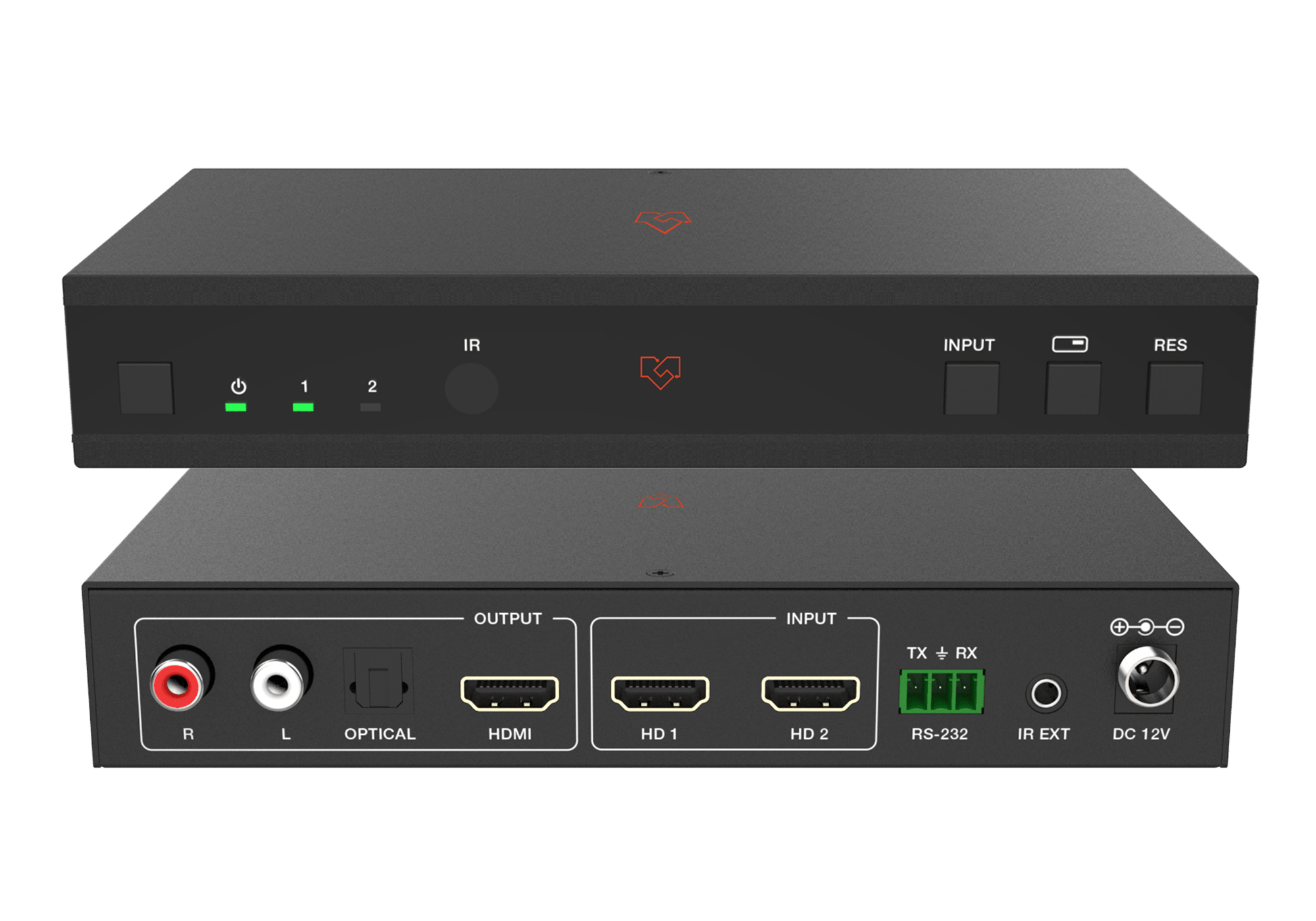
HDMI Multiviewers (single-display monitoring): These combine multiple HDMI sources onto one screen. The VLML-2x1H20 is a compact 2x1 multiviewer for desktop workstations and small monitoring positions. The VLML-4x1H20 shows four sources on a single 4K60 display with audio de-embedding for room audio. The VLML-4x1H20ET adds seamless switching, making it the choice for broadcast preview and live production where visible switching glitches are unacceptable.
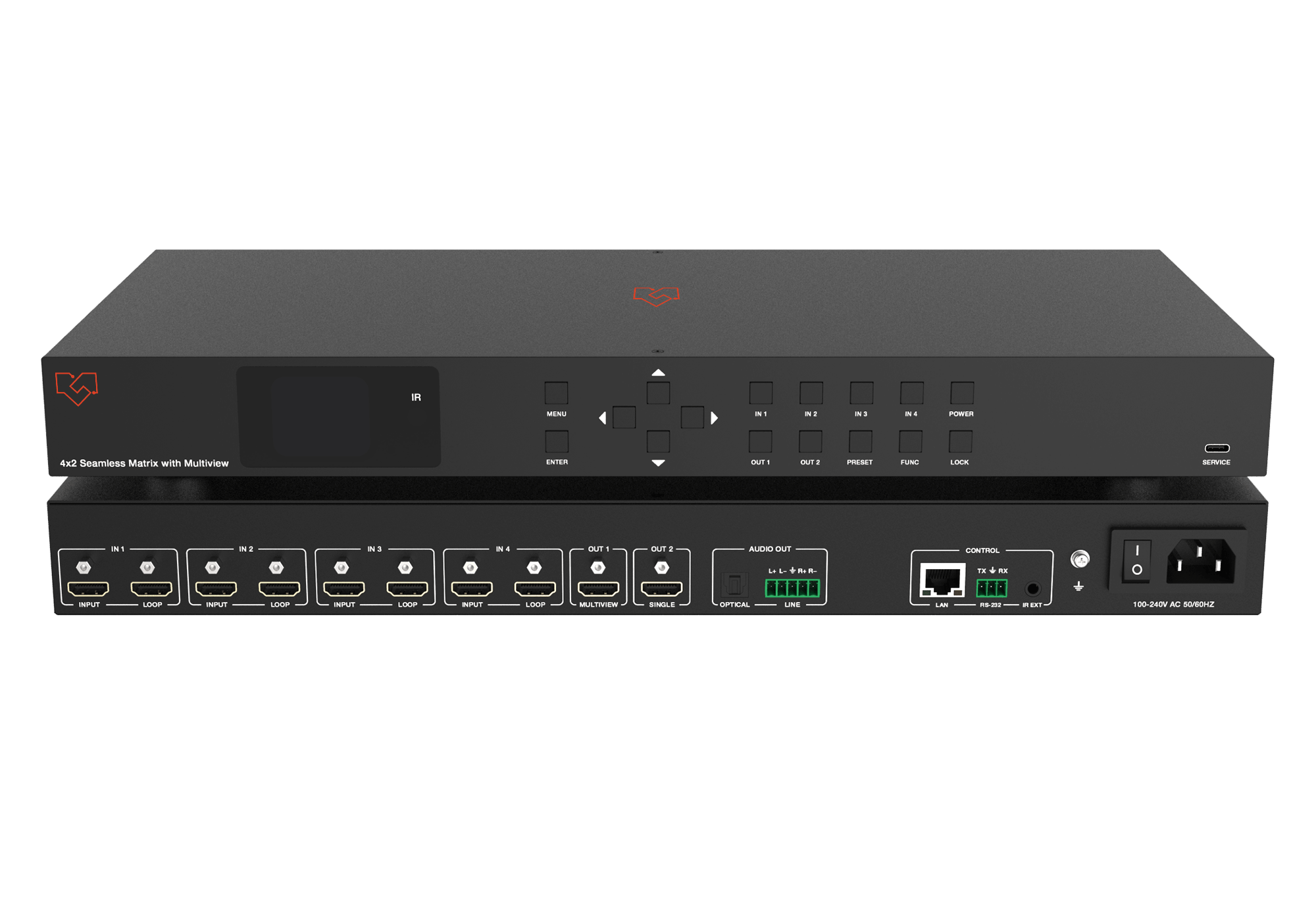
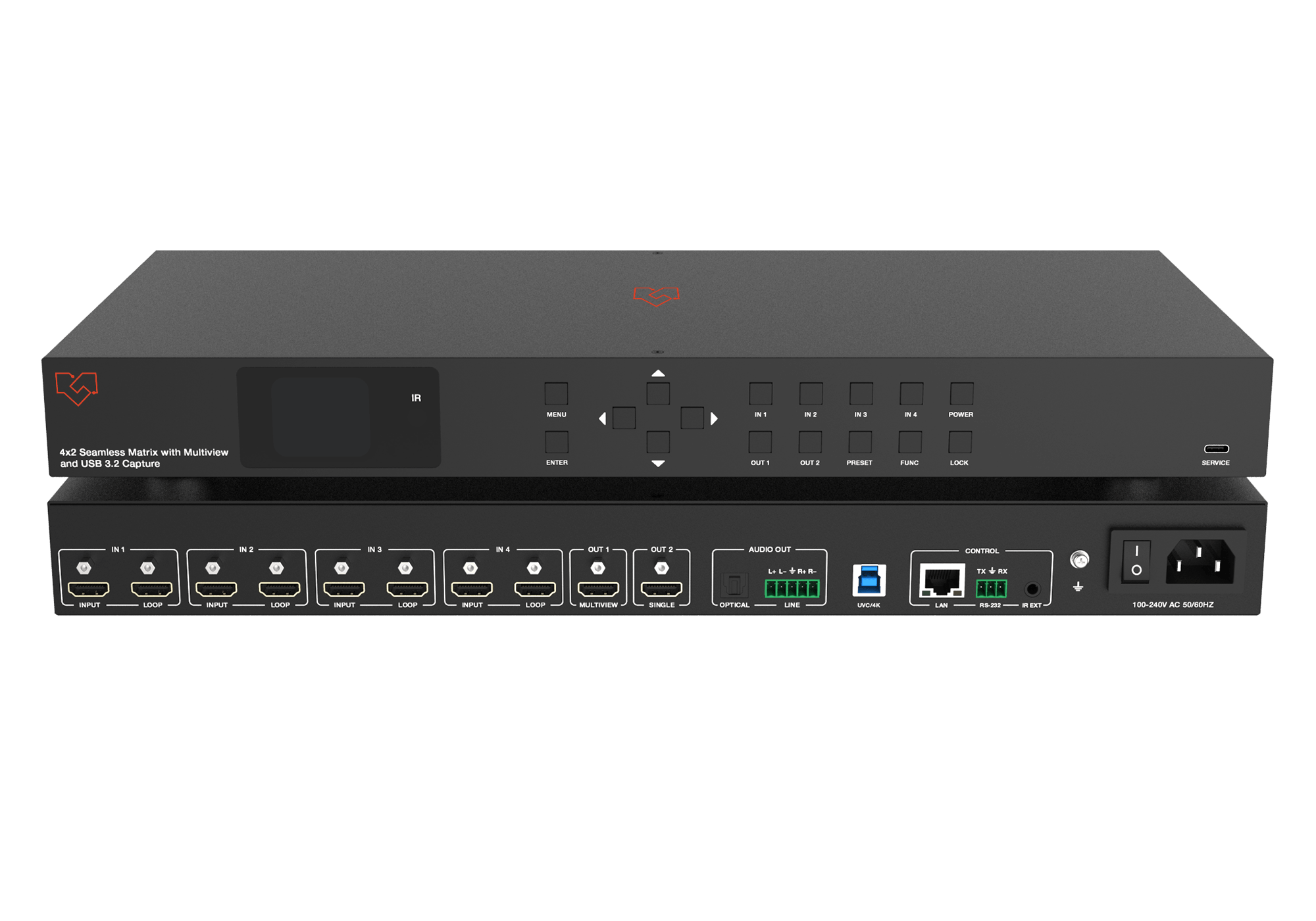
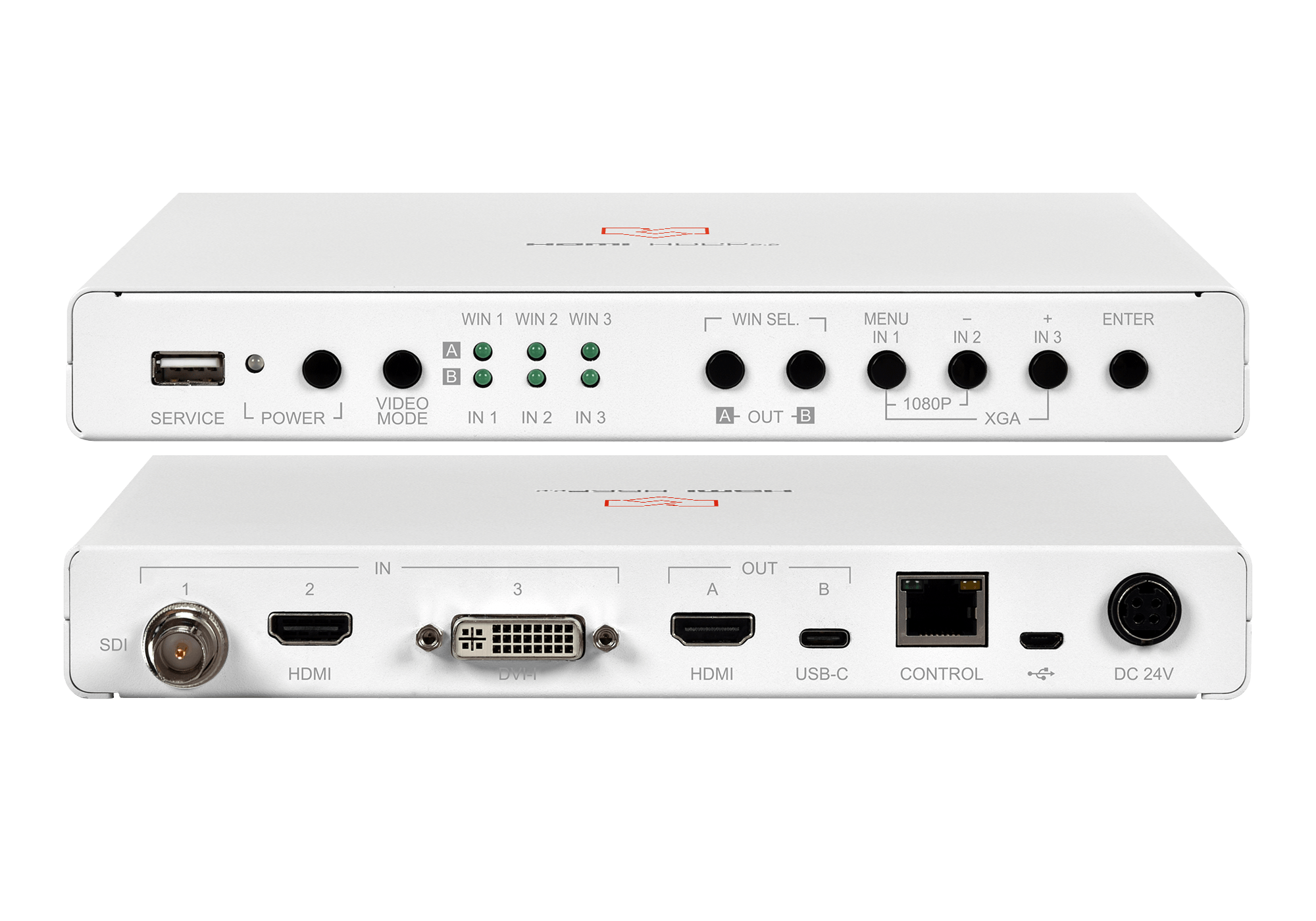
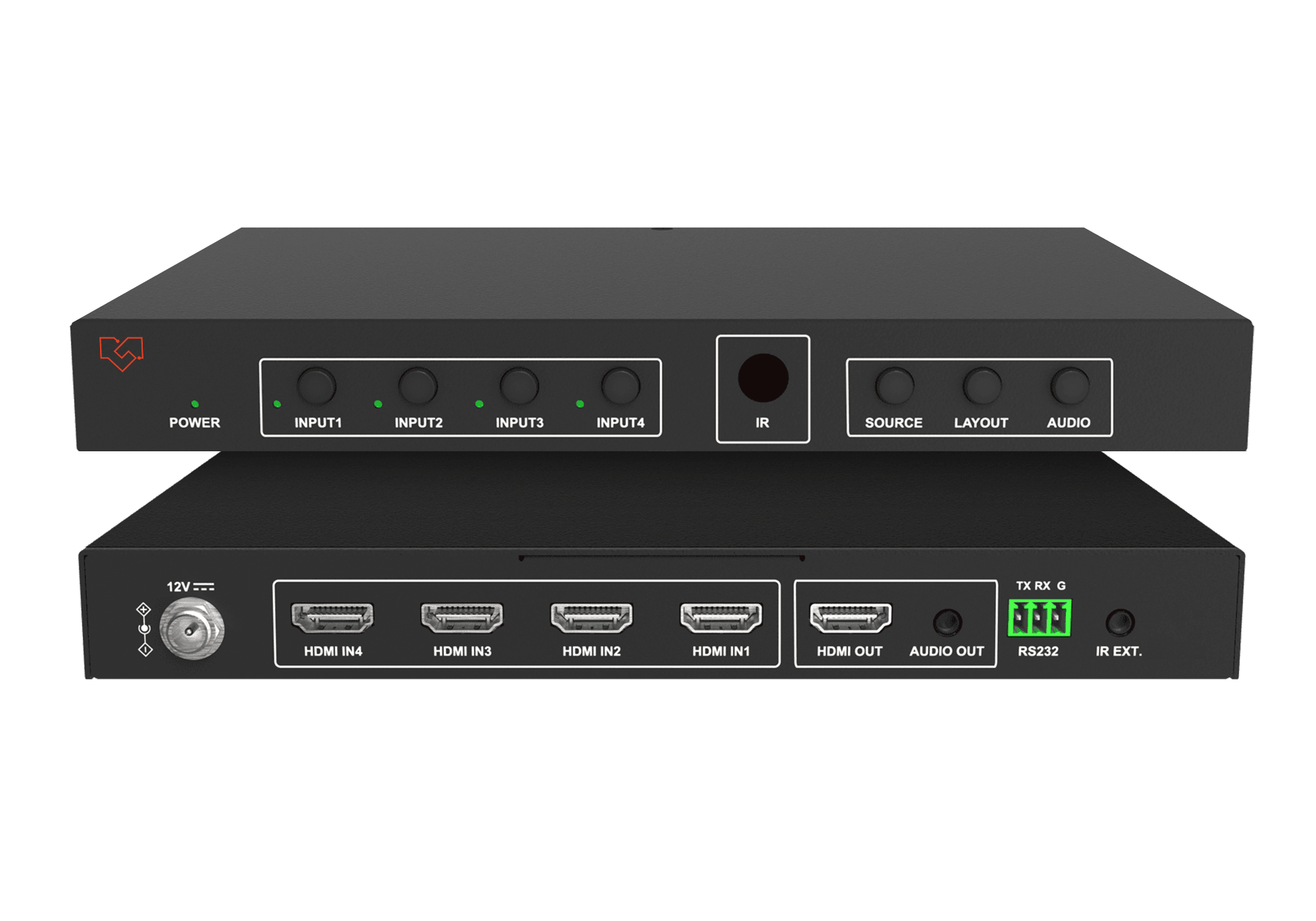
Multi-View Matrix (multiple independent outputs): These route sources to more than one output while offering multiview. The VLML-SDH3x2 is a 3x2 SDI/HDMI seamless matrix with PiP/PoP for mixed SDI and HDMI environments. The VLML-4x2H20M is an 18Gbps 4x2 matrix with an integrated multiviewer for quad-view monitoring plus independent routing to two outputs. The VLML-4x2KM4K-SR adds KVM for operator positions that need keyboard and mouse control across sources. The VLML-4x2U30A brings seamless 4x2 switching with HDR pass-through and HDR-to-SDR conversion for conference rooms, and the VLML-4x2U30AC adds a 4K USB 3.2 capture output for recording or streaming the room feed.
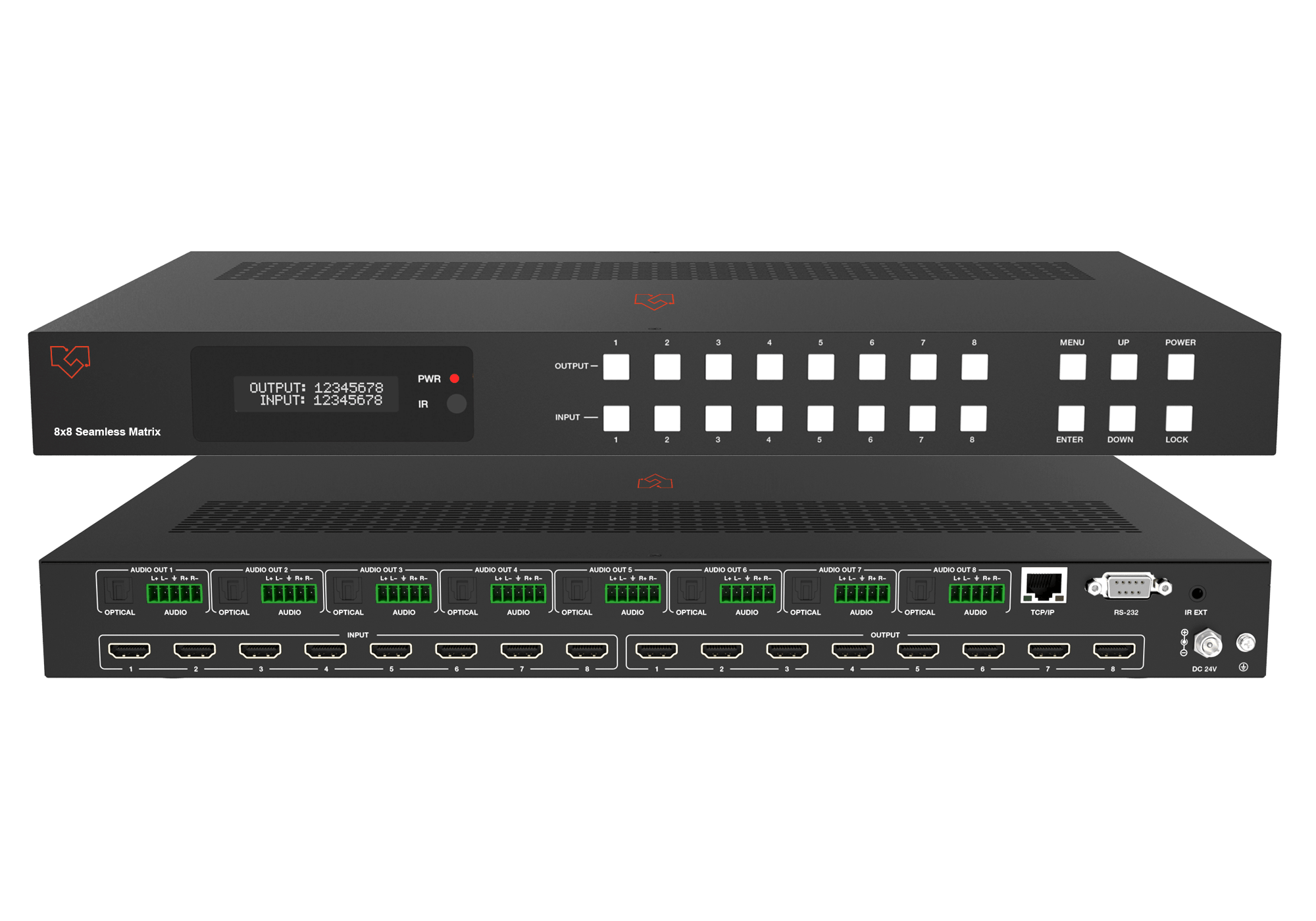
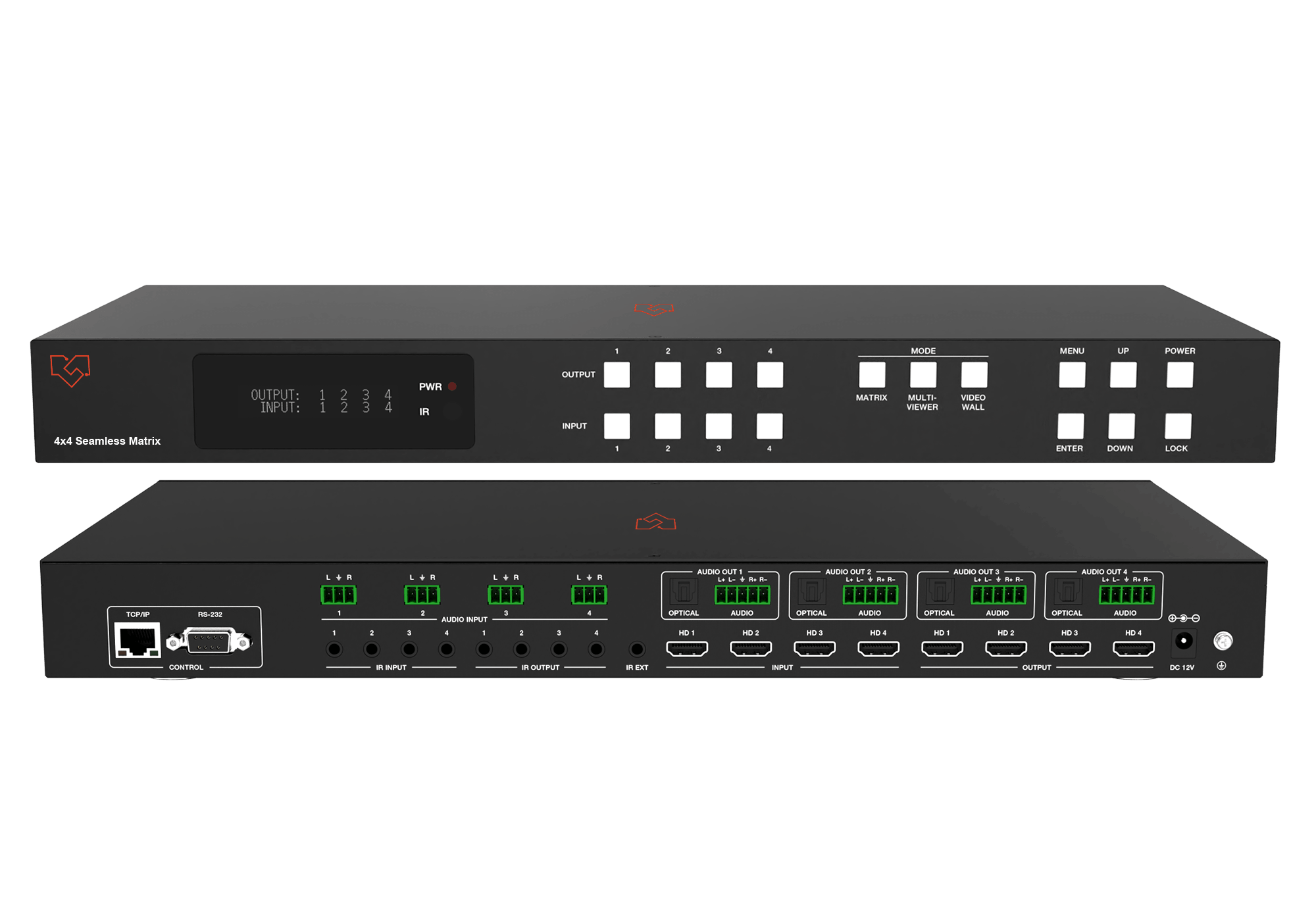
Multi-View Matrix with Video Walls (one image across many screens): These add tiled video wall on top of matrix routing and multiview. The VLML-4x4AM drives four displays with ten built-in splicing modes, audio embedding and de-embedding, and a 4x4 IR matrix. The VLML-8x8AM scales to eight displays with a freeform rows-by-columns wall, per-screen bezel correction, and twelve multiview layouts.
Key selection variable: the deciding factor is what sits on the output side. Choose HDMI Multiviewers when one monitor shows every source, Multi-View Matrix when different displays need different content at the same time, and Multi-View Matrix with Video Walls when one picture must span a grid of screens. From there, narrow by seamless switching for production, HDR for mixed-display rooms, USB capture for conferencing, and KVM for operator control.
Multiviewer Selection Guide
Filter VigilLink's multi-view processor range by output type or capability to find the right multiviewer, matrix, or video-wall switch. Every model handles up to 4K60 4:4:4 and is backed by a 6-year warranty.
Showing 10 of 10 products
| Product | Category | Inputs | Outputs | Video‑Wall | Seamless | HDR | Best for |
|---|---|---|---|---|---|---|---|
| VLML-8x8AM | Video Walls | 8× HDMI | 8× HDMI (up to 8 displays) | Yes | Yes | — | Large tiled walls up to 8 displays with freeform layout and per-screen bezel correction |
| VLML-4x4AM | Video Walls | 4× HDMI | 4× HDMI (up to 4 displays) | Yes | Yes | — | Four-display walls with audio embedding and a 4×4 IR matrix |
| VLML-4x2U30A | Multi-View Matrix | 4× HDMI | 2× HDMI + loop-outs | — | Yes | Yes | HDR conference rooms showing several sources on one screen |
| VLML-4x2U30AC | Multi-View Matrix | 4× HDMI | 2× HDMI + USB 3.2 capture | — | Yes | Yes | Capturing or streaming a switched or multiview feed to a computer over USB |
| VLML-SDH3x2 | Multi-View Matrix | HDMI · DVI · 12G-SDI | HDMI · USB-C | — | Yes | — | Broadcast and production rooms mixing SDI and HDMI sources |
| VLML-4x2KM4K-SR | Multi-View Matrix | 4× HDMI | 2× HDMI | — | — | — | Operator positions needing KVM control across connected computers |
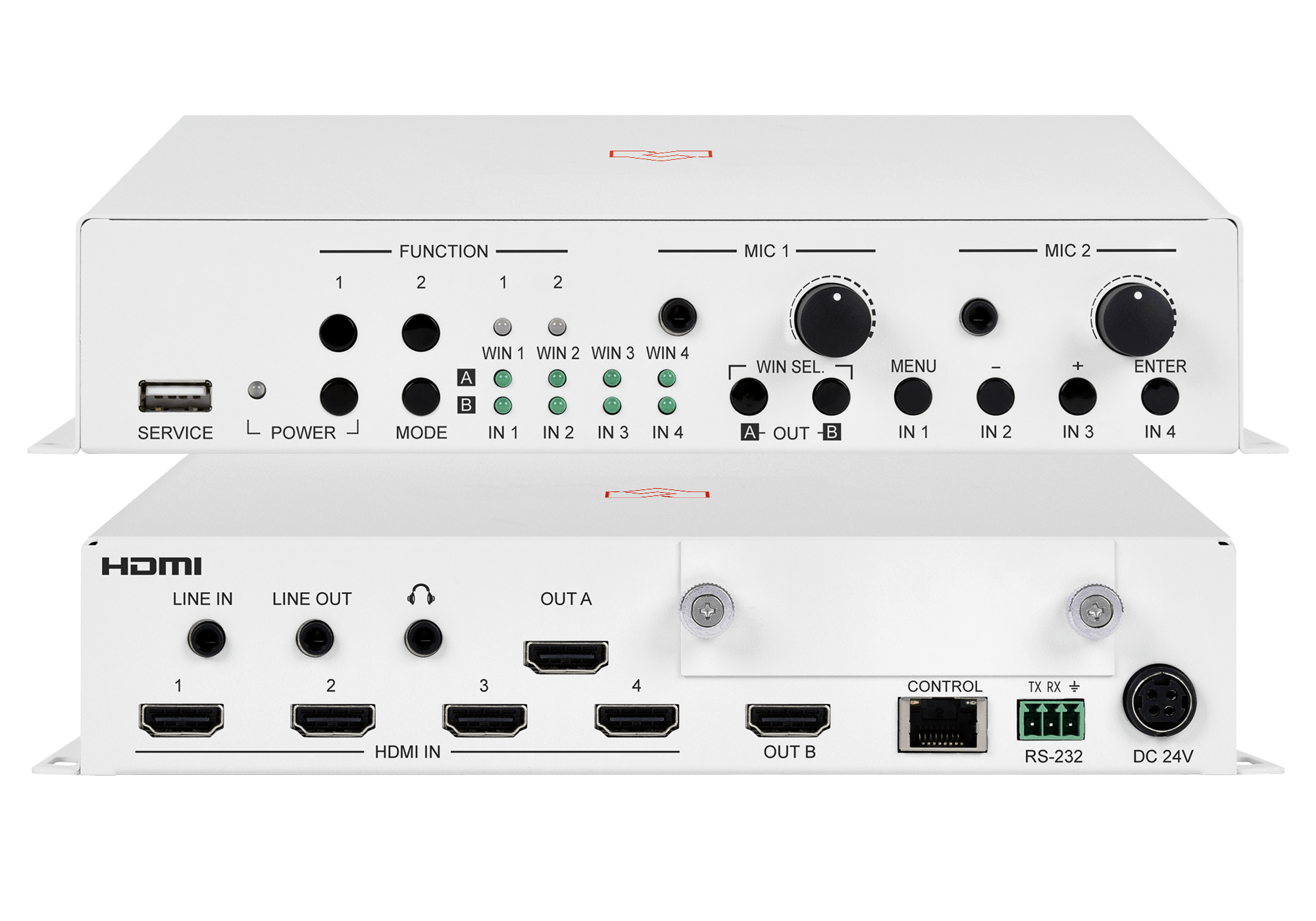
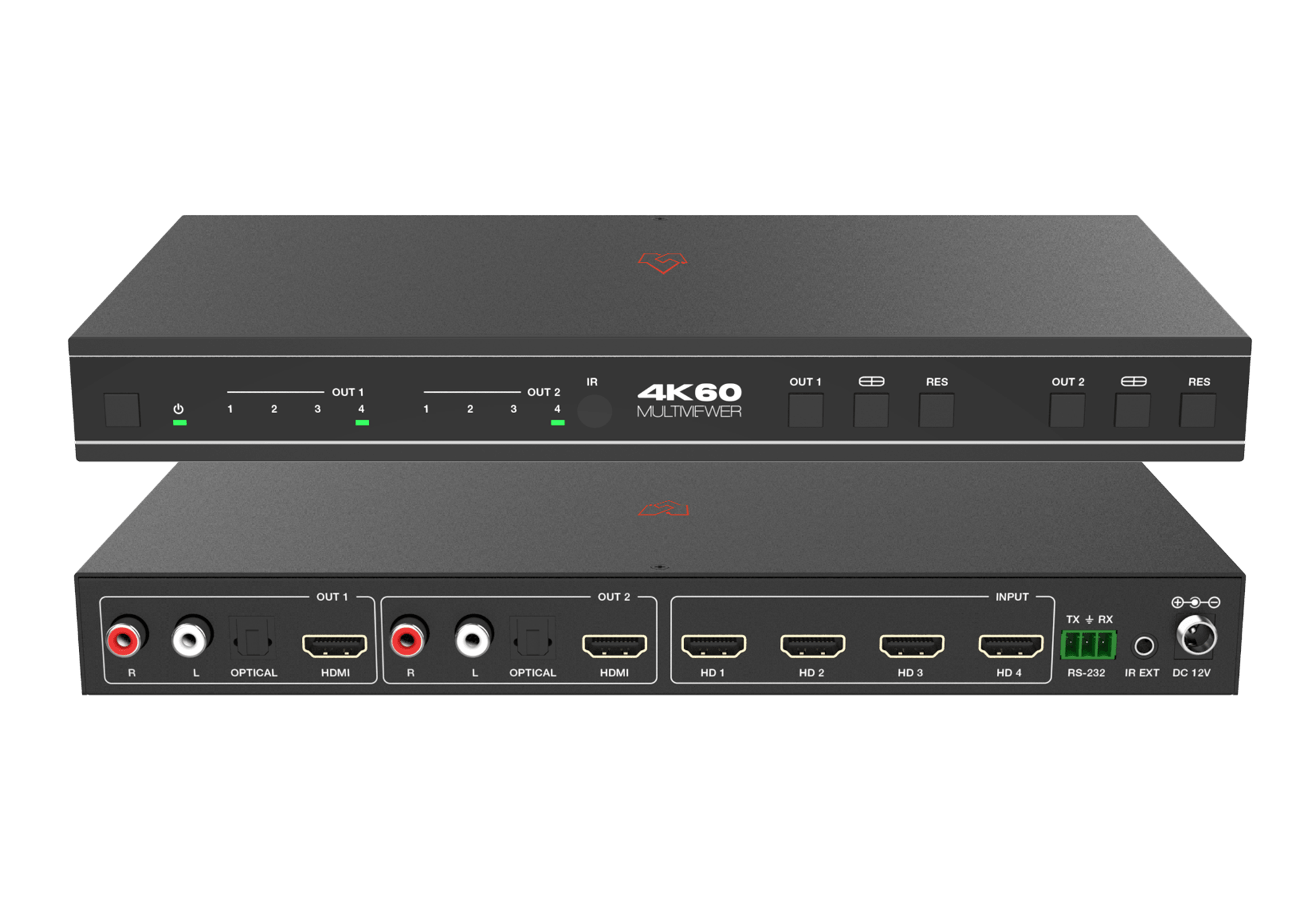
| VLML-4x2H20M | Multi-View Matrix | 4× HDMI | 2× HDMI (independent routing) | — | — | — | Straightforward 4×2 HDMI routing with quad-view monitoring |
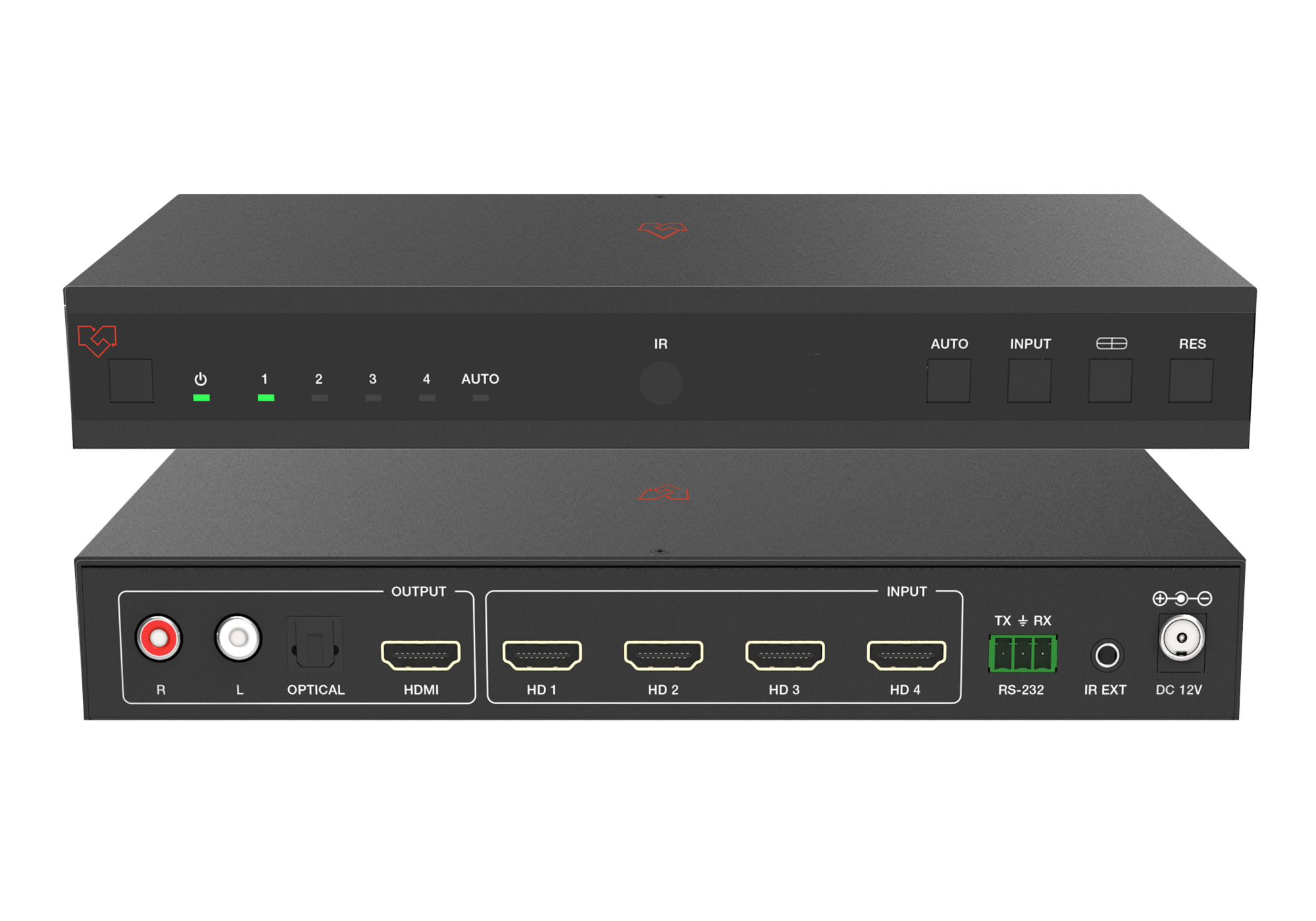
| VLML-4x1H20 | HDMI Multiviewers | 4× HDMI | 1× HDMI (4K60) | — | — | — | Four-source monitoring on one display with audio de-embedding |
| VLML-2x1H20 | HDMI Multiviewers | 2× HDMI | 1× HDMI (4K60) | — | — | — | Compact two-source monitoring at a desk or edit suite |
| VLML-4x1H20ET | HDMI Multiviewers | 4× HDMI | 1× HDMI (4K60 4:4:4) | — | Yes | — | Broadcast preview and live production needing cut-free switching |
6-Year Warranty4K60 18GbpsSeamless SwitchingMultiview & Video Wall
Ideal Applications
Control Rooms & Operations Centers
Security operations centers, network operations centers, and facility management rooms require continuous visibility across multiple camera feeds, status displays, and data dashboards simultaneously. Multi-view processors consolidate four HDMI sources onto a single large-format display, reducing monitor count while maintaining full situational awareness. The VLML-4x2H20M adds independent routing to a second output, allowing operators to push selected sources to a shared wall display without disrupting their primary monitoring view. For rooms that need a single spanned picture rather than separate feeds, the VLML-8x8AM and VLML-4x4AM tile one image across a grid of displays with bezel correction.
Broadcast & Live Production
Production directors and technical directors monitoring multiple camera feeds, graphics sources, and program outputs need instantaneous, glitch-free switching between preview and program. The VLML-4X1H20ET's seamless switching eliminates the cut-to-black that standard switchers produce, ensuring transitions in preview monitoring are indistinguishable from live program cuts. For smaller productions with two camera positions, the VLML-2X1H20 provides a compact monitoring solution without requiring a dedicated multiviewer rack unit.
Corporate AV & Executive Boardrooms
Conference rooms with multiple presentation sources — laptops, video conferencing systems, and document cameras — benefit from multi-view monitoring at the AV operator's control position. The VLML-4X1H20 displays all connected sources simultaneously, allowing the operator to confirm signal quality before routing to the room display, while audio de-embedding provides an independent monitor feed for the room's audio system.
Education & Lecture Capture
Lecture theaters and multi-camera distance learning installations require the presenter or operator to simultaneously monitor the capture system, room camera, content display, and remote participant feed. A 4-source multiviewer consolidates all four signals onto a single operator monitor, with the VLML-4X2H20M allowing simultaneous routing of the selected source to the projection system and a secondary confidence monitor.
Video Walls & Large-Format Display
Digital signage, lobbies, and command centers that present one image across a grid of screens use the VLML-4x4AM and VLML-8x8AM to tile sources into a single wall. Per-screen bezel correction closes the seams so content flows unbroken across panels, and the same units also switch and multiview, so a wall can shift between a spanned image and independent source windows for different events.
Conferencing & Capture
Meeting rooms and hybrid-production spaces use the VLML-4x2U30AC to feed a switched or multiview picture into conferencing and streaming software over USB. The computer sees it as a plug-and-play capture device with no drivers, while HDR pass-through and HDR-to-SDR conversion keep both HDR and SDR displays correct in the same room.
Frequently Asked Questions
What is a multi-view processor and how does it work?
A multi-view processor takes multiple HDMI video sources and displays them simultaneously on a single output screen — dividing the display into configurable zones or windows, each showing a different input. The processor combines the incoming signals in real time and outputs a single composite HDMI signal to a connected monitor or display. This eliminates the need for one monitor per source in multi-source monitoring environments.
What is the difference between seamless and standard switching in a multiviewer?
Standard multiviewers produce a brief black frame during source switching — typically one to three frames. Seamless switching eliminates this interruption, transitioning between sources instantaneously. For broadcast preview, live production, and applications where the switching itself is visible to an audience or director, seamless switching (VLML-4X1H20ET) is required. For control room monitoring and corporate AV where source transitions are operator-initiated and not audience-facing, standard switching is acceptable.
What is the difference between the VLML-4X1H20 and VLML-4X1H20ET?
Both display four HDMI sources simultaneously on a single 4K60 output. The VLML-4X1H20ET adds seamless switching — source changes are instantaneous with no black frame — making it suited for broadcast and live production environments. The VLML-4X1H20 provides audio de-embedding to optical and analog outputs for room audio routing. Choose the VLML-4X1H20ET for seamless production workflows; choose the VLML-4X1H20 when audio de-embedding is the priority.
Can a VigilLink multi-view processor route sources to two independent displays simultaneously?
Yes. The VLML-4X2H20M and VLML-4X2KM4K-SR both provide dual HDMI outputs with independent routing. Any of the four sources can be routed to either output independently, while the multi-view composite display is available on the primary output. This allows simultaneous multi-source monitoring at an operator station and single-source full-screen output to a room display or confidence monitor.
What layout modes are available on VigilLink multi-view processors?
Layout options vary by model. Available modes across the range include quad-split (four equal windows), picture-in-picture (one primary source with smaller overlaid windows), side-by-side (two sources at equal size), and custom configurable window arrangements. The VLML-SDH3X2 supports PiP with a 3-source input configuration. Specific layout modes for each model are detailed in the individual product documentation.
Do VigilLink multi-view processors support 4K input sources?
Yes. All models in the VigilLink Multi-View Processor range accept 4K60 HDMI 2.0 sources at 18Gbps bandwidth. Input and output resolutions up to 3840×2160@60Hz are supported, with HDR passthrough on selected models. Check individual product specifications for exact input resolution support per port.
Can I use a multi-view processor for KVM switching?
Yes. The VLML-4X2KM4K-SR includes integrated KVM (Keyboard, Video, Mouse) switching, allowing a single keyboard and mouse set to control multiple connected computers while monitoring all sources on the multiviewer display. For installations requiring multi-source video monitoring combined with USB peripheral sharing across computers, the VLML-4X2KM4K-SR is the purpose-built solution.
What is the difference between a multi-view processor and a matrix switcher?
A matrix switcher routes video sources to outputs independently — any input to any output — but typically shows one source at a time per output. A multi-view processor displays multiple sources simultaneously on a single output in a divided layout. The VLML-4X2H20M and VLML-4X2KM4K-SR combine both functions: they route sources to two independent outputs like a matrix switcher while simultaneously providing a multi-view composite display.
Which VigilLink multi-view subcategory should I choose?
Choose by output type. HDMI Multiviewers put every source on one display for monitoring. Multi-View Matrix units route to several independent displays while offering multiview. Multi-View Matrix with Video Walls units tile one image across a grid of screens. From there, narrow by seamless switching, HDR, USB capture, or KVM.
Which models support a video wall, and how many displays can they span?
The VLML-4x4AM and VLML-8x8AM support tiled video walls. The VLML-4x4AM spans up to four displays using ten built-in splicing modes, and the VLML-8x8AM spans up to eight displays in a freeform rows-by-columns layout, both with per-screen bezel correction.
Can I capture a multiview feed to a computer?
Yes. The VLML-4x2U30AC provides a USB 3.2 Gen 1 capture output that streams a switched source or a multiview layout at up to 4K using standard UVC and UAC, so conferencing and streaming software recognize it as a plug-and-play capture device.
Which models handle HDR sources?
The VLML-4x2U30A and VLML-4x2U30AC pass through HDR10, HDR10+, HLG, and Dolby Vision, and convert HDR to SDR for displays that cannot accept an HDR signal.