

Video Wall Processors | Video Wall Controllers, Seamless Matrix Switchers

Videowall Processors Selection Guide
Showing 4 of 4 products
| Model | I/O | Video Wall Formats | Video Wall |
Multi- view |
Seamless | Audio De-Embed |
HDR | Cascad- ing |
Bezel Comp |
180° Rotation |
LED Wall Sync |
PIP | Loop Out |
|---|---|---|---|---|---|---|---|---|---|---|---|---|---|
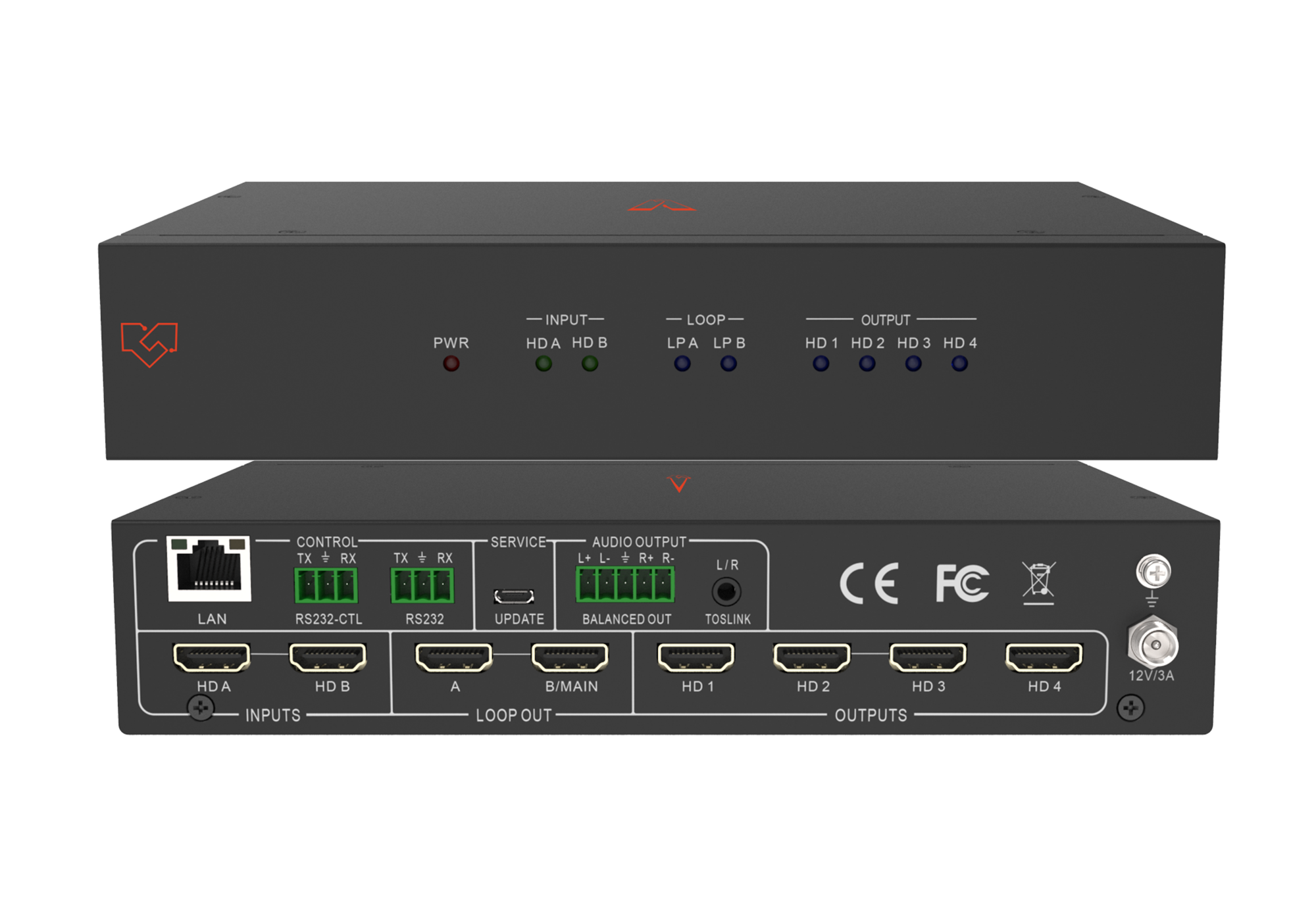
| VLVW-MX24P | 2 in / 4 out | 2x4, 2x9, cascade to 16x16 | ✓ | — | — | ✓ | ✓ | ✓ | ✓ | ✓ | — | ✓ | ✓ |
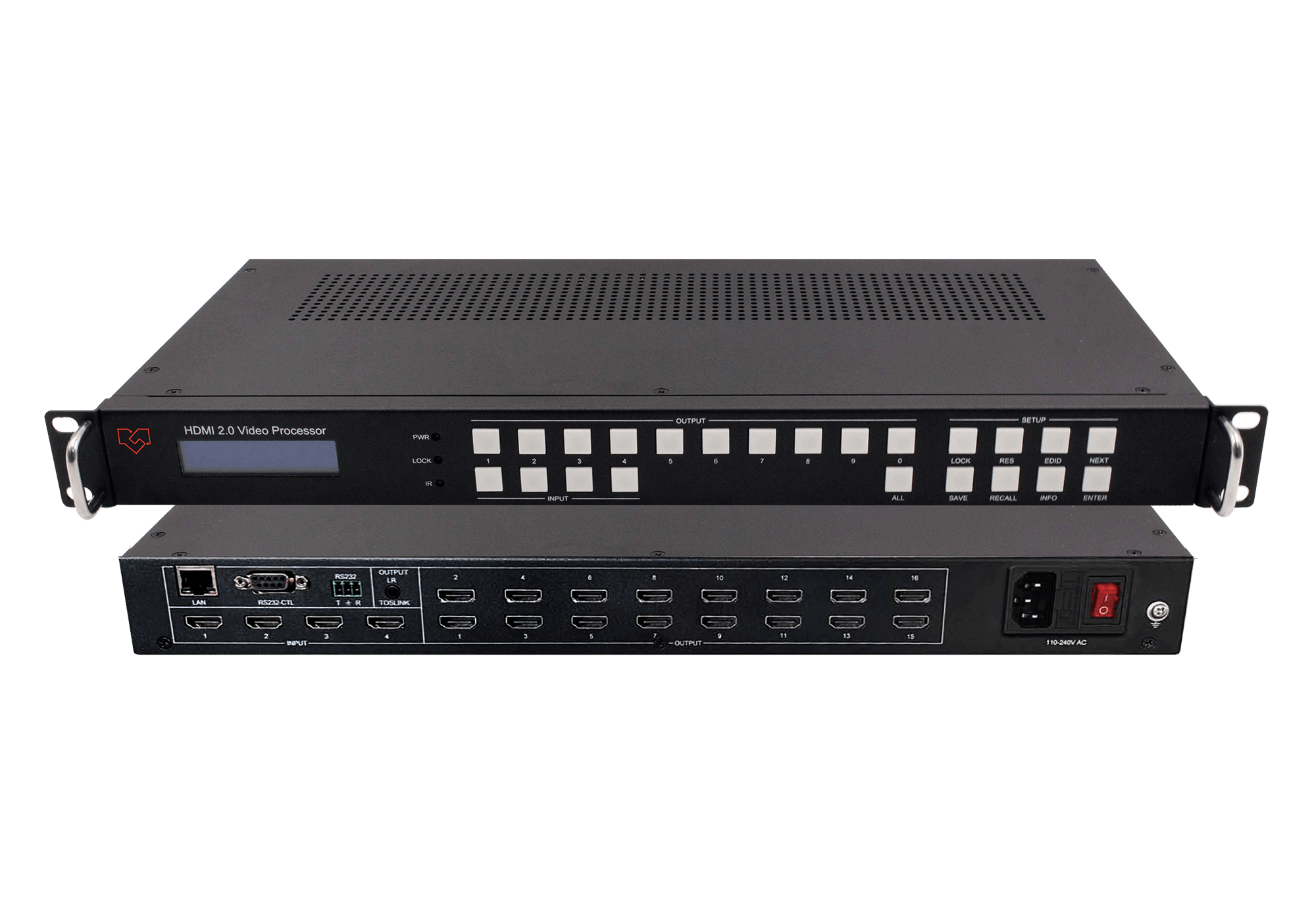
| VLVW-MX416P | 4 in / 16 out | LCD and LED video walls | ✓ | ✓ | ✓ | ✓ | ✓ | — | ✓ | ✓ | ✓ | — | — |
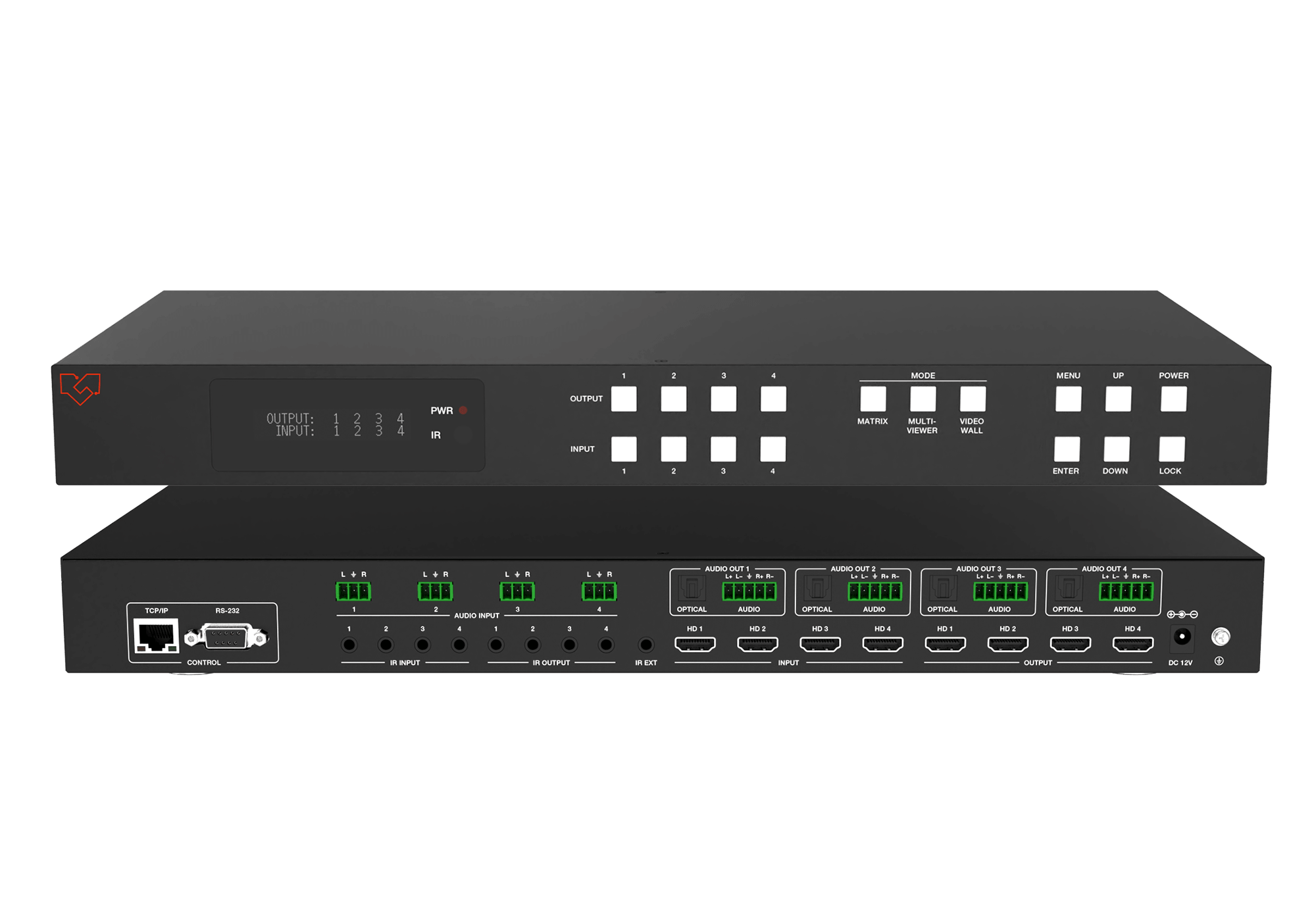
| VLVW-MX44P | 4 in / 4 out | 9 Video Wall Splicing Modes | ✓ | ✓ | ✓ | ✓ | ✓ | — | — | — | — | — | — |
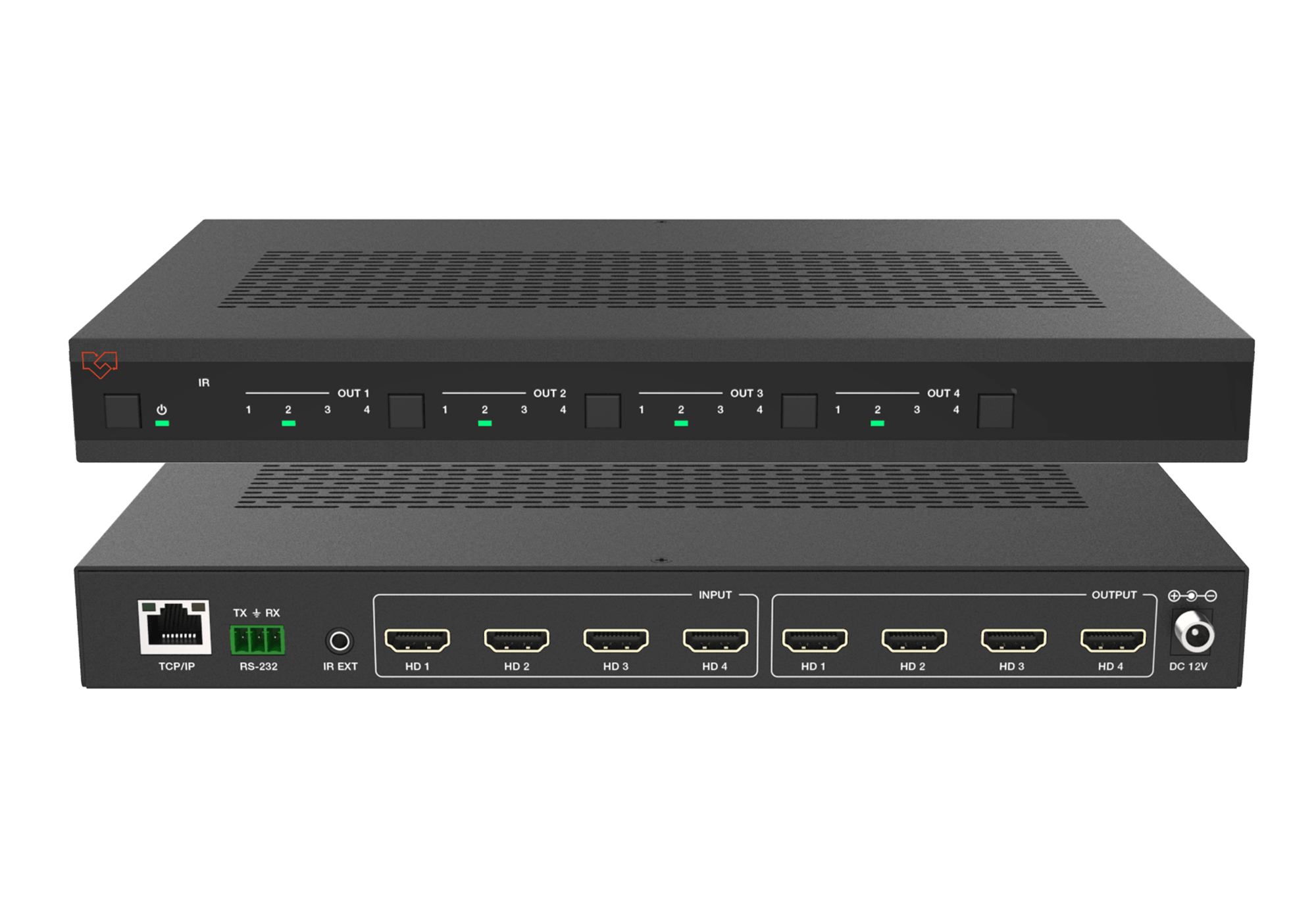
| VLVW-SMX44TW | 4 in / 4 out | 2x2, 4x1, 1x4 | ✓ | — | ✓ | — | ✓ | — | — | — | — | — | — |
No products match every selected feature. Deselect a filter to widen the results.
Professional Videowall Processing Solutions
VigilLink's Videowall Processor range covers 2-input to 4-input configurations with up to 4 simultaneous HDMI outputs at 4K60 18Gbps, combining videowall tiling, seamless matrix switching, and multi-viewer monitoring in single-chassis units engineered for professional AV installations.
Whether you need a dedicated 2x4 processor to split one source across four tiled LCD or LED panels, a 4x4 seamless matrix switcher that simultaneously manages videowall output, source routing, and multi-source monitoring, or a flexible controller supporting both TV wall layouts and picture-in-picture overlays, VigilLink provides the hardware to drive every scale of video wall — from a 2×2 display grid in a retail lobby to a full operator display wall in a command center without requiring a PC-based software.
Why Choose VigilLink Videowall Processors
4K60 18Gbps signal throughput — HDMI 2.0 inputs and outputs at 18Gbps bandwidth preserve full 4K@60Hz 4:4:4 resolution on every output panel, with HDR and wide color gamut passthrough for accurate visual reproduction across the video wall
Seamless source switching — selected models switch between sources with zero black-frame interruption, ensuring continuity of display content during source changes in live environments
Integrated multiviewer monitoring — selected models display all connected inputs simultaneously in a divided layout on a dedicated monitoring output, giving operators full source visibility without a separate multiviewer device
Flexible layout and bezel correction — configurable tiling modes with bezel gap compensation ensure displayed content aligns accurately across panel bezels for a seamless visual canvas
Matrix switching and videowall in one chassis — 4x4 models combine full matrix routing (any source to any output) with videowall tiling in a single unit, eliminating the need for a separate matrix switcher in complex installations
RS-232, IR, and TCP/IP control — all models support multiple control protocols for integration with AMX, Crestron, VigilLynx™, and other third-party control systems in managed AV environments
Choosing the Right Videowall Processor
Dedicated Videowall Processor (VLVW-MX24P): A focused 2-input, 4-output HDMI 2.0 videowall processor at 18Gbps — the correct choice when the primary requirement is splitting or routing one or two sources across a 4-panel display array. The VLVW-MX24P handles tiling, bezel correction, and layout configuration for 1×4, 2×2, and other 4-screen arrangements without the overhead of matrix switching. Choose this model for retail digital signage, lobby displays, and event environments where source count is limited and output simplicity is the priority.
4x4 Matrix Videowall Controllers (VLVW-MX44P / VLVW-SMX44TW): Both are 4-input, 4-output HDMI 2.0 seamless matrix switchers with integrated videowall capability. The VLVW-MX44P adds a dedicated multiviewer monitoring output — displaying all four sources simultaneously — making it the stronger choice for control room and operations environments where source monitoring alongside videowall output is required. The VLVW-SMX44TW focuses on seamless TV wall presentation without the multiviewer output, suited for conference rooms, retail installations, and any environment where clean switching and tiled display are the primary needs without a dedicated operator monitoring feed.
Multi-Output Video Wall Controller (VLVW-MX416P): The most capable unit in the range, the VLVW-MX416P drives up to 16 display outputs with a 4-window multiviewer and full seamless matrix switching — suited for large-scale command centers, broadcast facilities, and enterprise operations rooms where display counts exceed what a 4-output processor can accommodate. Choose the VLVW-MX416P when the installation calls for more than four display panels in the video wall array.
Ideal Applications
Command Centers & Security Operations
Network operations centers, security command rooms, and utility control facilities drive arrays of displays showing maps, dashboards, camera feeds, and status data simultaneously. The VLVW-MX44P's integrated multiviewer lets operators monitor all sources at a dedicated screen while the main video wall displays the active feed, and its 4x4 matrix switching allows any source to be routed to any display panel without cabling changes. The VLVW-MX416P scales this to facilities requiring 8, 12, or 16-panel display walls.
Corporate Lobbies & Digital Signage
Retail environments, hotel lobbies, and corporate reception areas use tiled display arrays to create high-impact brand and wayfinding content at a scale that single large-format displays cannot match. The VLVW-MX24P drives a 4-panel tiled array from a single media player or digital signage source, with bezel correction compensating for panel frame gaps to produce a seamless visual impression across the entire installation.
Broadcast & Live Production
Television studios and live event production facilities use video walls for set design, content playback, and audience engagement displays driven by multiple dynamic sources. The VLVW-SMX44TW's seamless switching ensures source transitions on the video wall are instantaneous and cut-free — critical for on-camera walls where switching artifacts would be visible in the broadcast signal. The 4x4 matrix allows production teams to pre-load source selections and execute transitions in real time.
Conference Rooms & Executive Briefing Centers
Large boardrooms and executive presentation spaces increasingly use 2×2 or 1×4 display arrays instead of single large-format screens to achieve greater total display area without projection. The VLVW-MX24P or VLVW-SMX44TW drives these configurations from laptop, video conferencing, and media player sources, with RS-232 and TCP/IP control integration allowing source and layout selection from a room control touchpanel.
Frequently Asked Questions
What is a videowall processor and what does it do?
A videowall processor takes one or more HDMI video sources and distributes the signal across multiple display outputs — either tiling a single source as a unified image spanning all screens, routing different sources to individual screens, or combining both functions simultaneously. It handles the geometry, scaling, and synchronization required to make multiple separate displays appear as a single continuous canvas. VigilLink videowall processors also incorporate bezel correction to compensate for panel frame gaps in the tiled layout.
What is the difference between a videowall processor and a matrix switcher?
A matrix switcher routes any input to any output independently — one source per output at a time — without tiling or geometry processing. A videowall processor adds the ability to split a single source across multiple outputs as a tiled image, apply bezel correction, and configure display layout zones. VigilLink's 4x4 models (VLVW-MX44P and VLVW-SMX44TW) combine both functions: full 4x4 matrix switching and videowall tiling are available simultaneously in a single chassis.
What is the difference between the VLVW-MX44P and VLVW-SMX44TW?
Both are 4-input, 4-output HDMI 2.0 seamless matrix switchers with integrated videowall capability at 18Gbps. The VLVW-MX44P adds a dedicated multiviewer output that displays all four sources simultaneously in a divided layout — making it the better choice for operator environments requiring continuous source monitoring alongside the main video wall output. The VLVW-SMX44TW focuses on seamless TV wall presentation without the multiviewer feed, suited for conference rooms and display installations where source monitoring at the processor level is not required.
What display configurations does the VLVW-MX24P support?
The VLVW-MX24P supports a range of 4-output tiling configurations including 1×4 (four screens in a horizontal row), 2×2 (four screens in a grid), and other layouts configurable through the unit's setup interface. Bezel correction is applied to compensate for panel frame widths. The processor accepts up to 2 HDMI 2.0 inputs, allowing either a single source to be tiled across all four outputs or two sources to be assigned to independent output groups.
What is seamless switching and why does it matter for video walls?
Seamless switching eliminates the black frame that standard video switchers produce during source transitions. On a video wall, a standard switch causes all display panels to go black briefly before the new source appears — highly visible and disruptive in presentation, broadcast, and live event environments. Seamless switching on the VLVW-SMX44TW, VLVW-MX44P, and VLVW-MX416P ensures source changes on the wall are instantaneous, maintaining a continuous display experience during live transitions.
How many displays can VigilLink videowall processors drive?
The VLVW-MX24P drives up to 4 displays. The VLVW-MX44P and VLVW-SMX44TW each drive up to 4 displays. The VLVW-MX416P drives up to 16 displays, making it suited for large-scale command center and broadcast video wall installations. For installations exceeding 16 outputs, AVoIP-based distribution solutions should be evaluated.
Do VigilLink videowall processors integrate with control systems?
Yes. All VigilLink videowall processors support RS-232 serial control and TCP/IP network control, enabling integration with Crestron, AMX, Extron, VigilLynx™, and other third-party AV control systems. Source selection, layout switching, and output routing can be triggered via control system commands, allowing video wall operation to be embedded into room automation scenarios such as presentation mode activation, occupancy-based content switching, and scheduled content playback.
What is bezel correction and does VigilLink support it?
Bezel correction (also called bezel compensation) adjusts the content geometry across a tiled display array so that the image appears to continue seamlessly behind the physical panel bezels rather than being interrupted by them. Without bezel correction, content spanning multiple screens appears distorted at the seam points. VigilLink videowall processors include configurable bezel correction to compensate for the physical frame width of the installed display panels, maintaining accurate visual proportions across the full display array.