

Home > HDMI Audio Solutions
HDMI Audio Solutions | eARC/ARC, Audio Extraction, Embedding & Downmixing
eARC / ARC Audio Adapters & Extractors






HDMI Audio Extractors & Embedders
Professional HDMI Audio Solutions
VigilLink's HDMI Audio Solutions address the full range of audio routing challenges in professional and commercial AV installations — from extracting eARC audio from an 8K HDMI 2.1 TV and routing it to a legacy AV amplifier or soundbar, to embedding an external audio source into an HDMI video stream, to de-embedding and downmixing surround sound to a simple analog stereo output. The product line spans HDMI 1.4 ARC, HDMI 2.0 eARC/ARC at 18Gbps, and HDMI 2.1 eARC at full 48Gbps, covering every installed base from legacy ARC-only systems to the latest 8K HDMI 2.1 displays.
Audio return channels and embedded HDMI audio have become the dominant audio routing method in both residential and commercial AV, but the signal chain rarely lines up perfectly: a TV with eARC may need to feed an older amplifier with only HDMI ARC; an HDMI 2.1 source may need its audio simultaneously delivered to a display and a separate S/PDIF audio system; or a legacy analog audio source may need to be embedded into an HDMI video path for a single-cable run to a display. VigilLink's HDMI Audio Solutions provide compact, professionally engineered adapters, extractors, and embedders to resolve each of these scenarios cleanly and reliably.
Why Choose VigilLink HDMI Audio Solutions
Full HDMI 2.1 48Gbps coverage with HDCP 2.3 — the VLHA-H21ERAD, VLHA-H21DWM, VLHA-H21EMR, and VLHA-H21DEM all operate at 48Gbps, supporting 8K@60Hz and 4K@120Hz video passthrough with VRR, ALLM, HDR10, and Dolby Vision — no video quality compromise when inserting audio processing into an 8K signal chain
Complete eARC and ARC format support — eARC-capable models pass the full audio format suite including Dolby TrueHD, Dolby Atmos, DTS-HD Master Audio, and DTS:X, while ARC-only models handle PCM 2.0, Dolby 5.1, and DTS 5.1 — the right solution for every generation of installed equipment
CEC volume control integration — all eARC/ARC adapter and extractor models support CEC, enabling TV remote volume control of connected soundbars, amplifiers, and sound systems without additional control wiring
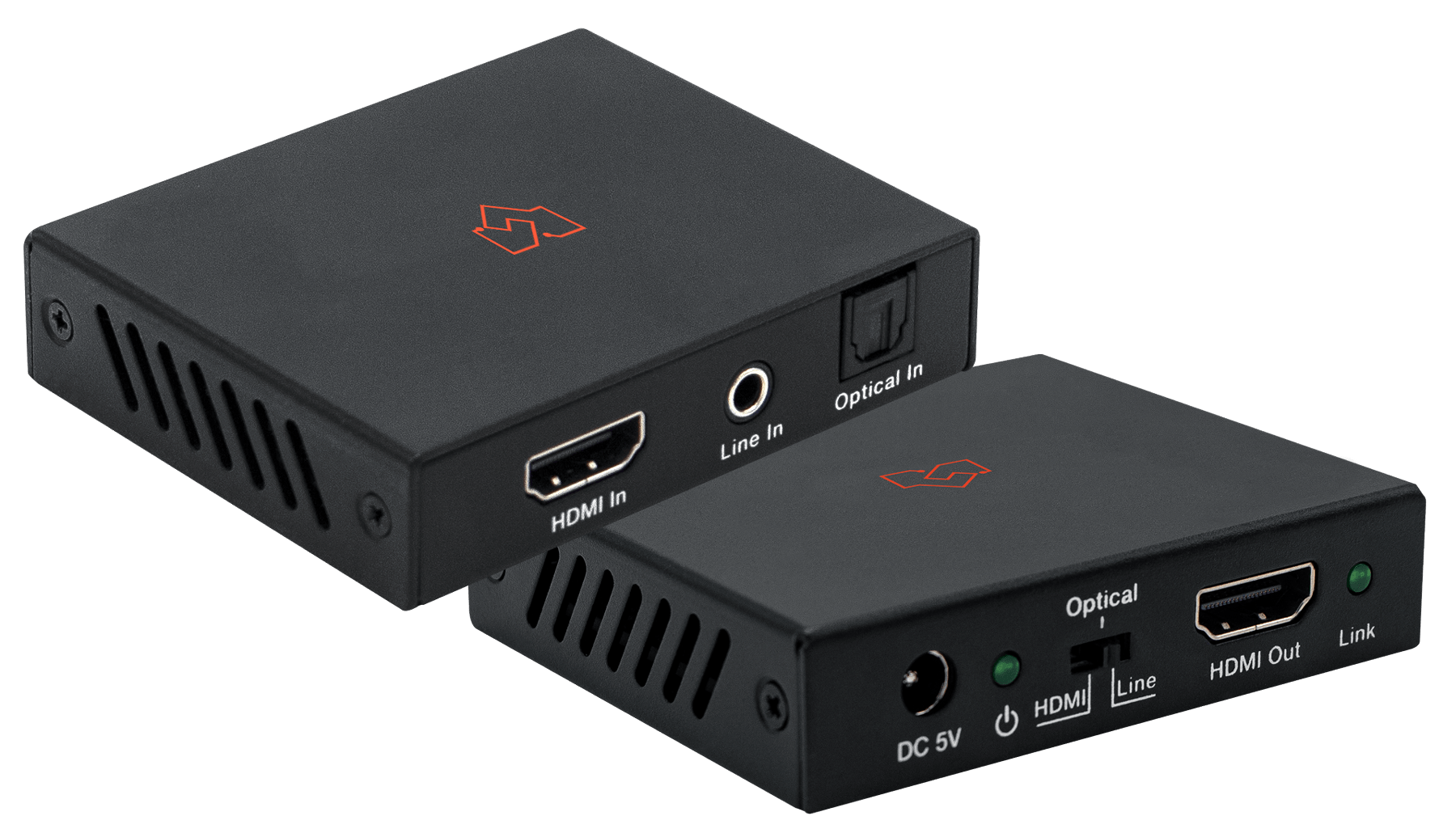
Audio embedding for legacy source integration — the VLHA-EMR embeds optical S/PDIF or analog stereo Line audio into the HDMI stream, enabling legacy audio sources to travel on a single HDMI cable to any HDMI-equipped display or AV system
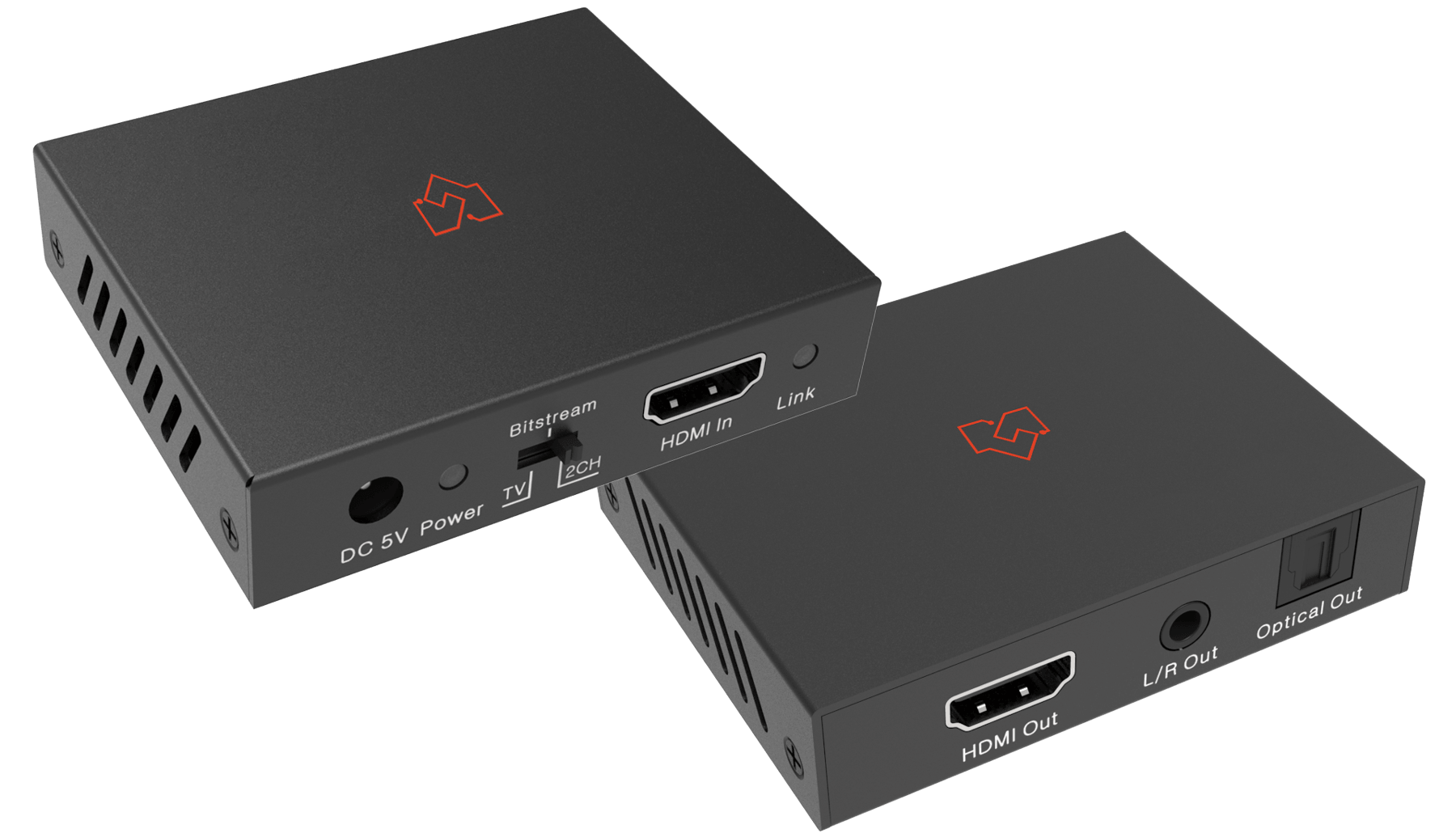
Downmix capability for analog-only audio destinations — the VLHA-REXD and VLHA-DWM both downmix multi-channel Dolby and DTS bitstreams to analog stereo automatically, eliminating the need for a separate audio decoder when the destination is a two-channel amplifier or headphone system
Compact, professional form factors — every VLHA-series product ships in a metal enclosure with a compact footprint suited to rack shelves, cable trays, or behind-display mounting; no proprietary power rails are required
Choosing the Right HDMI Audio Solution
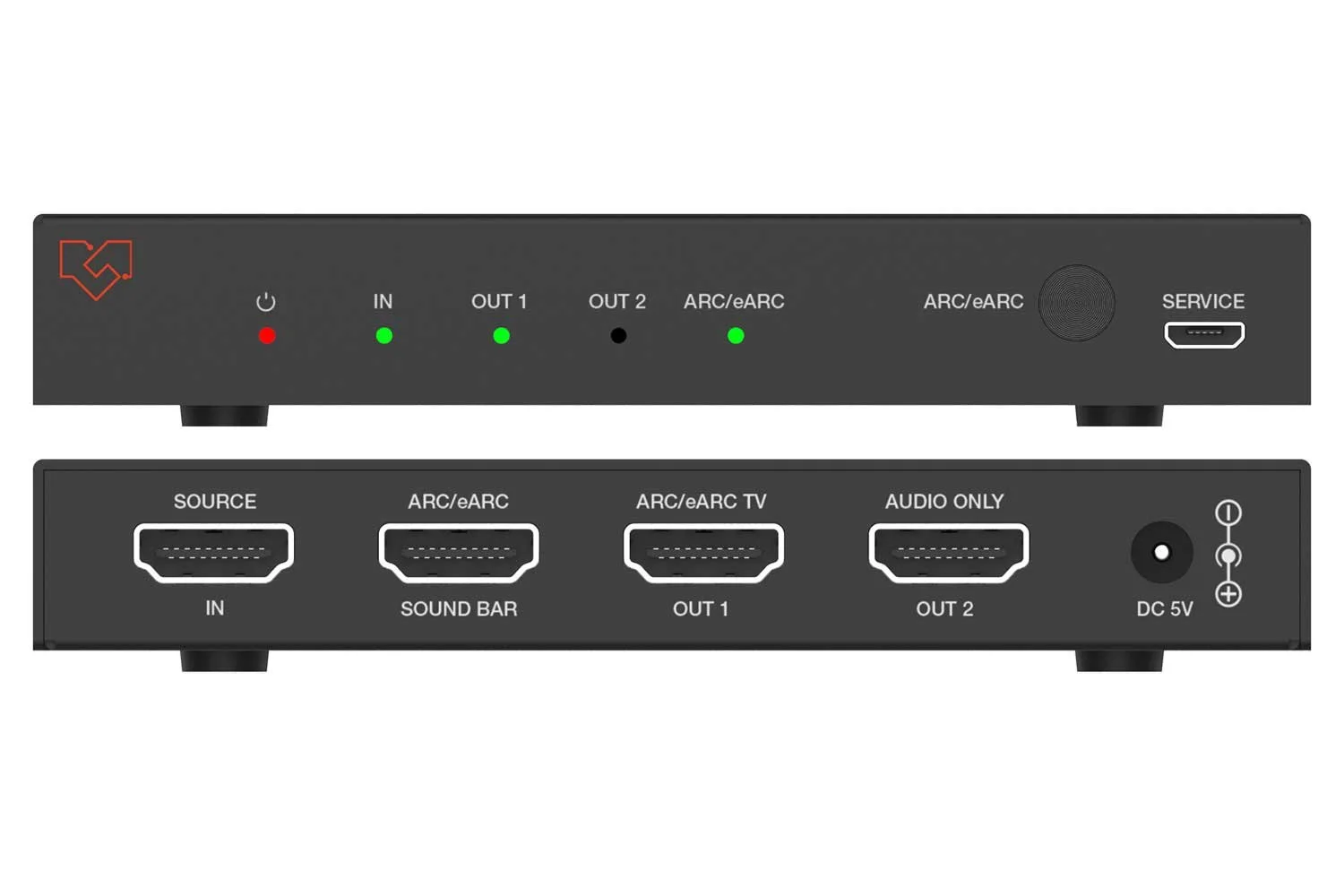
eARC/ARC Audio Adapters & Extractors (VLHA-H21ERAD / VLHA-ERAD / VLHA-H21DWM / VLHA-RCEX / VLHA-H21EMR / VLHA-EREX / VLHA-REXD): Choose this subcategory when the audio signal originates from the TV's return channel — streaming content, smart TV apps, or broadcast audio on the TV that must be sent back to an amplifier or soundbar. The VLHA-H21ERAD is the flagship, delivering 48Gbps HDMI 2.1 eARC with HDMI, S/PDIF, and analog outputs simultaneously to a full AV receiver. The VLHA-ERAD serves HDMI 2.0 installations with eARC/ARC soundbars and receivers. The VLHA-H21DWM and VLHA-H21EMR route eARC audio from 48Gbps sources to an amplifier or soundbar respectively. The VLHA-EREX extracts eARC audio to an HDMI output for legacy AV amplifiers. The VLHA-RCEX and VLHA-REXD are compact ARC extractors outputting 2-channel analog stereo, with the VLHA-REXD adding downmix from Dolby 5.1 and DTS 5.1.
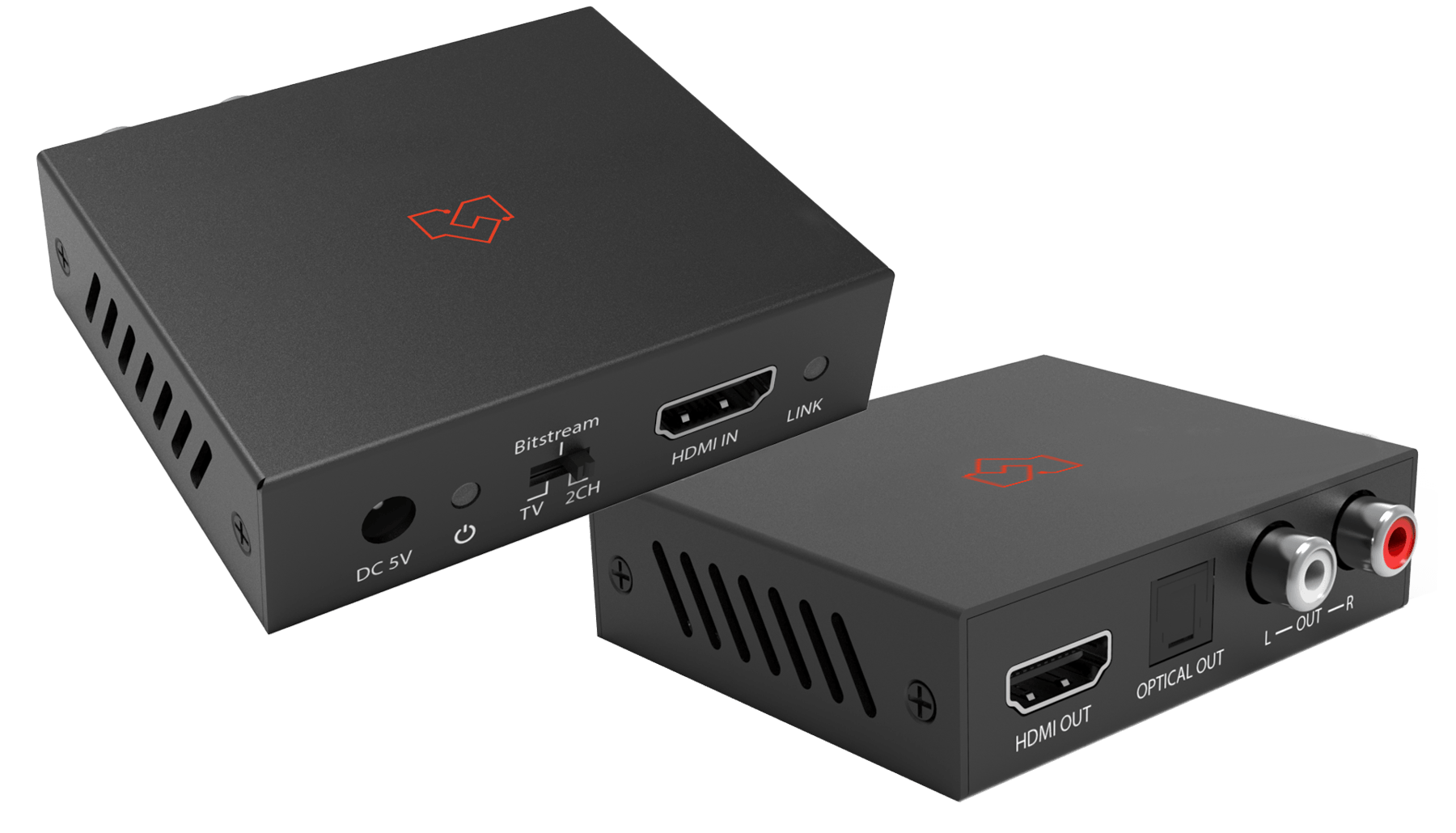
HDMI Audio Extractors & Embedders (VLHA-EMR / VLHA-DEM / VLHA-DWM / VLHA-H21DEM): Choose this subcategory when audio must be extracted from the forward HDMI path — the signal running from source to display — or when an external audio source must be inserted into that path. The VLHA-DEM extracts audio from any HDMI source to optical and analog stereo. The VLHA-DWM adds downmix to decode surround bitstreams to stereo at the output. The VLHA-EMR embeds optical or analog audio into the HDMI stream. The VLHA-H21DEM is the 8K 48Gbps solution for audio de-embedding from HDMI 2.1 sources.
Ideal Applications
Home Theater & Commercial Screening Rooms
eARC/ARC adapters allow modern 4K and 8K displays to deliver Dolby Atmos and DTS:X content back to existing AV receivers that predate eARC — eliminating the need to replace working amplifier equipment. The VLHA-H21ERAD simultaneously outputs HDMI, S/PDIF, and analog audio from a single 48Gbps eARC source, allowing the AV receiver, soundbar, and recording system to receive audio simultaneously.
Corporate AV & Conference Rooms
Conference rooms with HDMI-equipped sources and separate installed PA or ceiling speaker systems benefit from in-line audio extractors (VLHA-DEM, VLHA-DWM) that break audio out of the HDMI path without interrupting the video feed. HDMI audio embedders (VLHA-EMR) allow legacy analog sources — PC audio jacks, Bluetooth receivers, phone patch outputs — to ride a single HDMI cable to the display.
Hospitality & Digital Signage
Hotel guestrooms and retail environments with in-wall HDMI installations use ARC extractors to route TV audio to bedside amplifiers or zone speakers without additional wiring. The VLHA-RCEX and VLHA-REXD provide 2-channel analog stereo output with CEC volume control, making them ideal for guestroom and lobby audio integration.
Education & Government
Lecture halls and government briefing rooms with display-forward HDMI installations use audio de-embedders to simultaneously drive room PA systems and recording systems from a single HDMI source. Downmixing models (VLHA-DWM, VLHA-REXD) ensure surround-encoded content from media servers is correctly mixed to two-channel stereo for room PA systems without a dedicated decoder.
Broadcast & Production
Production suites and broadcast monitoring environments use HDMI audio de-embedders to verify audio alongside video on a single cable from source to monitor. The VLHA-H21DEM supports full 48Gbps HDMI 2.1 for 8K monitoring chains, extracting analog stereo and S/PDIF audio simultaneously with HDMI pass-through for program audio verification.
Frequently Asked Questions
What is eARC and how does it differ from ARC?
ARC (Audio Return Channel), introduced with HDMI 1.4, sends audio from a TV back to a connected AV receiver or soundbar over the HDMI cable — but only at compressed formats such as Dolby Digital 5.1 and DTS 5.1. eARC (Enhanced Audio Return Channel), introduced with HDMI 2.1, expands this to full uncompressed and object-based formats including LPCM 7.1, Dolby TrueHD, Dolby Atmos, DTS-HD Master Audio, and DTS:X. For Dolby Atmos or DTS:X audio from a TV, eARC is required. For basic 5.1 surround from a TV, ARC is sufficient.
Can I use an eARC adapter with a TV that only has ARC?
Yes, in most cases. eARC is backward compatible with ARC. An eARC-capable adapter (such as the VLHA-ERAD or VLHA-EREX) will negotiate ARC when connected to an ARC-only TV, passing the formats the TV's ARC channel supports — typically PCM, Dolby Digital 5.1, and DTS 5.1. Full Dolby TrueHD and Atmos passthrough requires an eARC-capable TV.
Do VigilLink HDMI audio adapters interrupt the video signal?
No. All VigilLink HDMI audio adapters operate as in-line devices with full HDMI pass-through — video continues from source to display at full bandwidth without interruption. The HDMI 2.1 series (VLHA-H21ERAD, VLHA-H21DWM, VLHA-H21EMR, VLHA-H21DEM) preserve the full 48Gbps signal path with no latency impact on video.
What audio formats are supported for S/PDIF (optical/coaxial) outputs?
S/PDIF optical and coaxial outputs on VigilLink HDMI audio products typically support PCM 2.0, Dolby Digital 2.0/5.1, and DTS 2.0/5.1. The S/PDIF interface has a fixed bandwidth ceiling that prevents transmission of lossless formats such as Dolby TrueHD and DTS-HD Master Audio over optical — those require an HDMI or HDMI eARC output. Products with downmix capability (VLHA-REXD, VLHA-DWM) decode TrueHD and DTS-HD at the device and output the result as PCM stereo on the analog output.
What is the difference between audio de-embedding and audio extraction?
Both terms describe removing audio from an HDMI signal. "De-embedding" typically refers to breaking out audio as a separate output while passing HDMI video through to a display — the video path continues unbroken. "Extraction" is sometimes used more broadly and can include ARC/eARC use cases where audio originates from the TV's return channel rather than a forward HDMI source. VigilLink's product lineup covers both functions.
Which products support CEC volume control?
All VLHA-series eARC/ARC adapters and extractors — including the VLHA-H21ERAD, VLHA-ERAD, VLHA-H21DWM, VLHA-H21EMR, VLHA-EREX, VLHA-RCEX, and VLHA-REXD — support CEC passthrough and CEC volume control from the TV remote to the connected audio destination. The VLHA-EMR and VLHA-DEM (HDMI embedding/extraction models) support CEC bypass.
Can the VLHA-EMR add a microphone or analog audio source to an HDMI video feed?
The VLHA-EMR accepts a 3.5mm analog stereo line-level input and embeds it into the HDMI stream alongside the video signal. It is designed for line-level sources — PC audio output, Bluetooth audio receivers, media player analog outputs — rather than microphone-level signals, which require preamplification before connection. For professional microphone integration into an HDMI-based AV system, VigilLink's Dante Network Audio product line provides a complete solution.
Are VigilLink HDMI audio products compatible with HDCP 2.3-protected content?
Yes. All HDMI 2.0 and HDMI 2.1 products in the VLHA series are HDCP 2.3 compliant, ensuring full compatibility with 4K and 8K protected content sources including 4K Blu-ray players, streaming devices, and broadcast equipment. HDCP compliance is maintained across the in-line video path without content interruption.