

Home > Multi-View Processors > HDMI Multiviewers

About VigilLink HDMI Multiviewers
HDMI multiviewers combine several HDMI sources onto a single display, dividing one screen into windows so every input stays visible without a separate monitor for each. They are the entry tier of the range: where a multi-view matrix routes to multiple independent displays and a video-wall unit tiles one image across many screens, an HDMI multiviewer drives a single output and focuses on consolidating sources for monitoring.
VigilLink's HDMI Multiviewer range covers three models that differ by source count and switching type. Options span a compact two-source unit for desktop monitoring, a four-source unit with audio de-embedding, and a four-source unit with seamless switching for broadcast and live production.
Choosing the Right HDMI Multiviewer
All three combine HDMI sources onto one 4K60 display. Select by how many sources you need to monitor and whether switching must be seamless.
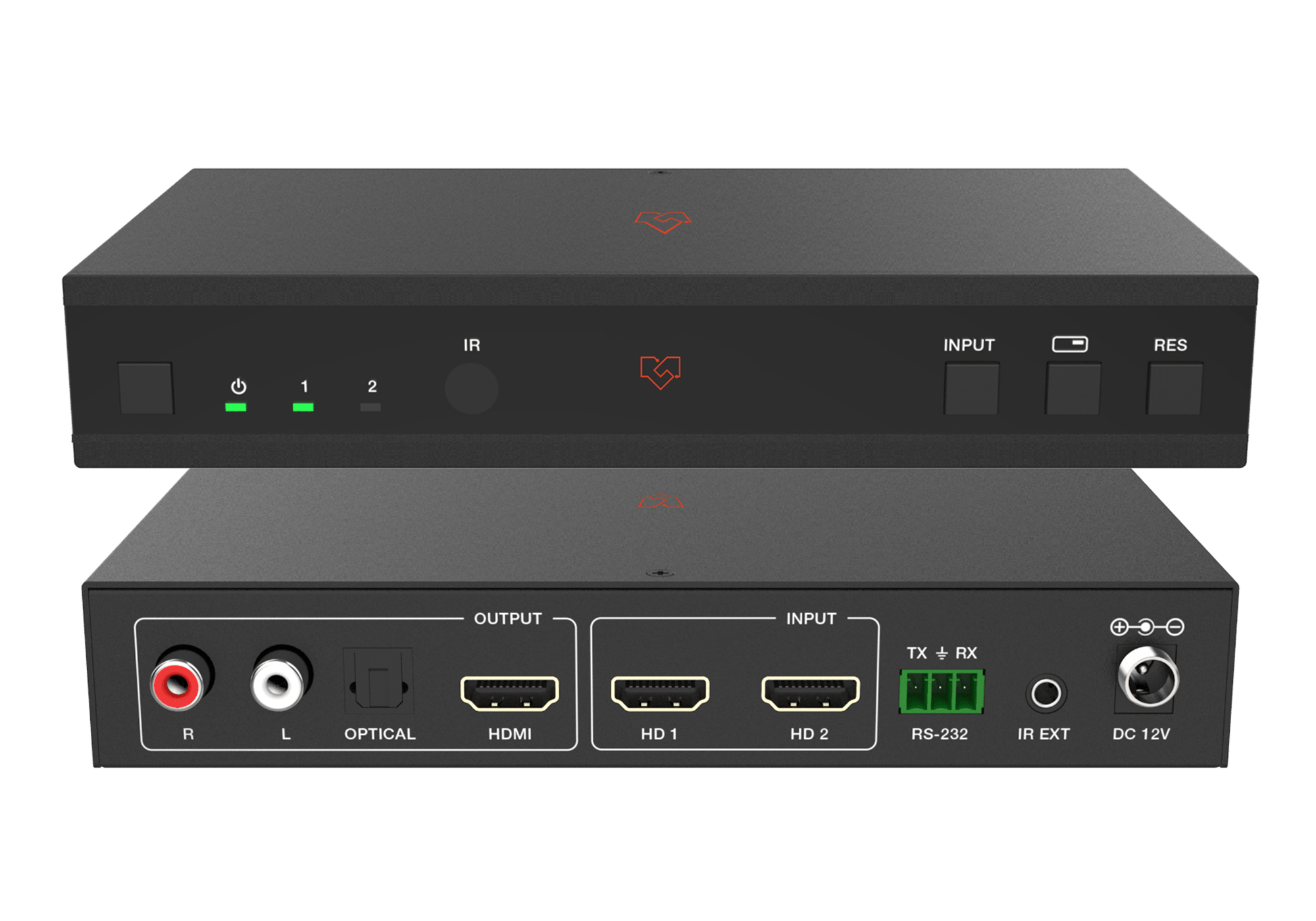
VLML-2x1H20 (two sources): A compact 2x1 HDMI multiviewer that combines two sources on a single display with adjustable window position. It suits desktop workstations, edit suites, and small monitoring positions where two feeds need to be watched at once without a dedicated rack unit.
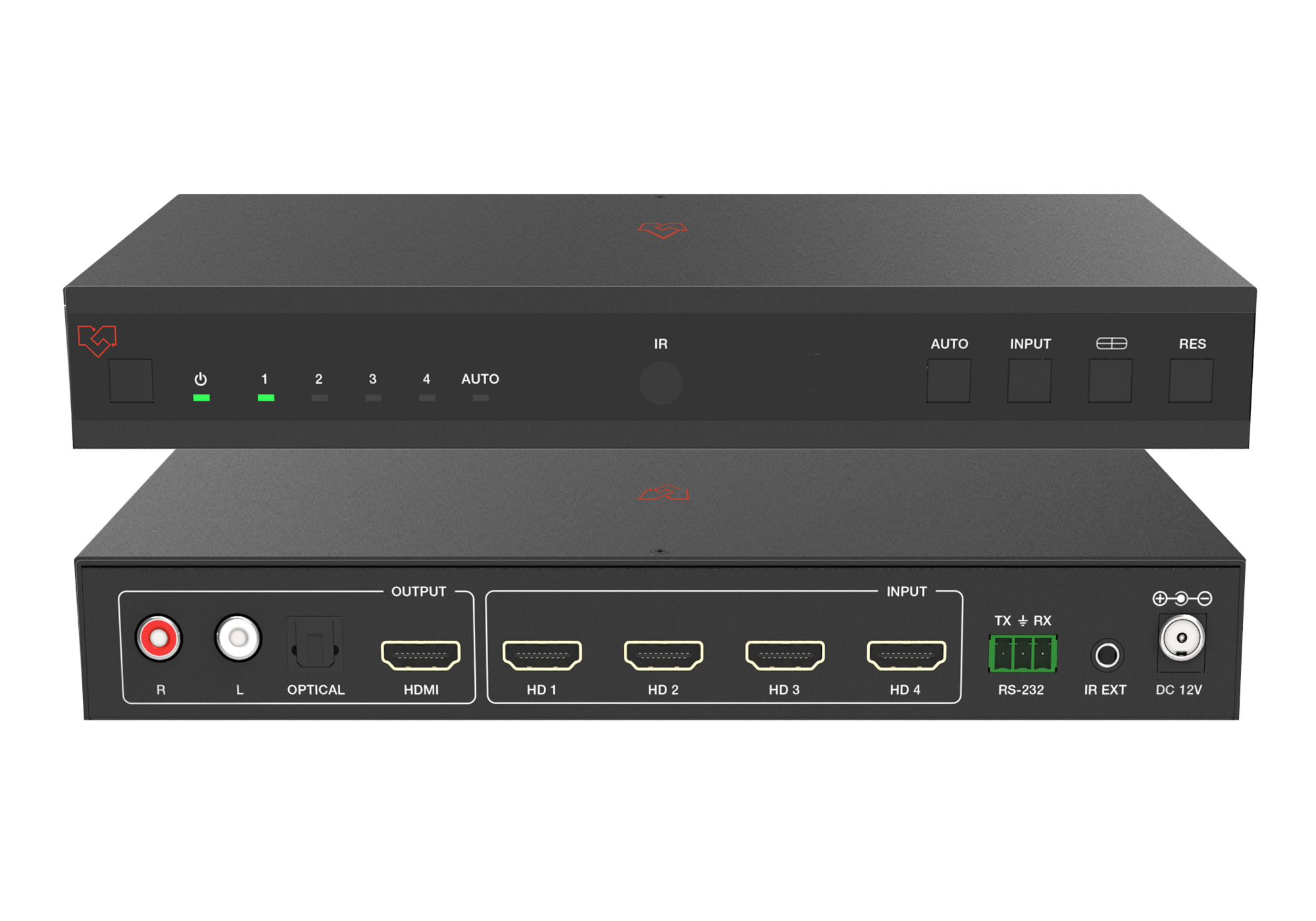
VLML-4x1H20 (four sources, audio de-embedding): A 4x1 HDMI multiviewer that shows four sources on one 4K60 display with flexible window layouts, and de-embeds audio to optical and analog outputs. It suits monitoring positions and corporate AV where an operator confirms four feeds and needs an independent audio monitor feed for the room.
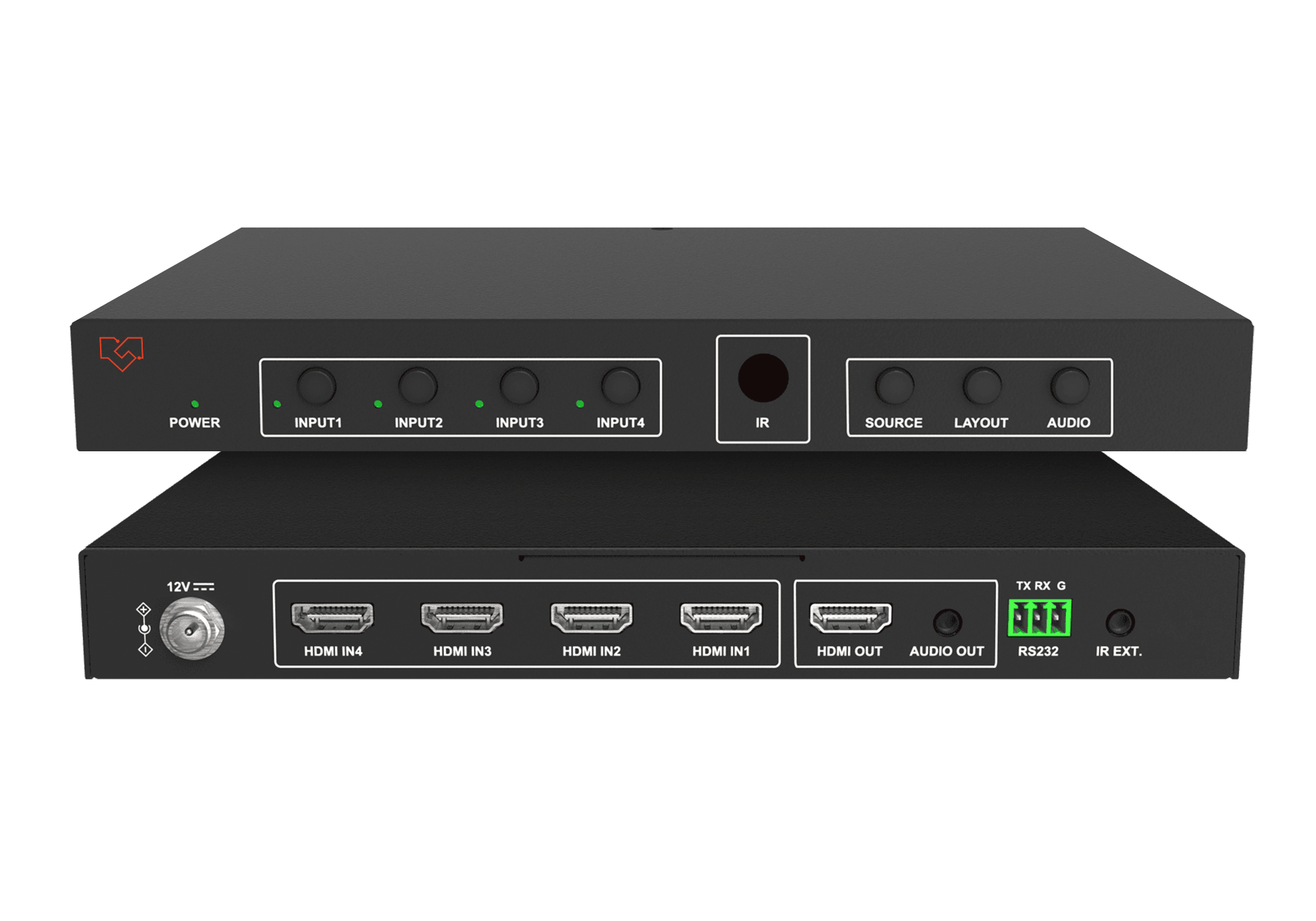
VLML-4x1H20ET (four sources, seamless switching): A 4x1 HDMI 2.0 multiviewer at 4K60 4:4:4 that adds seamless switching between sources, multiple layout modes including PIP and quad, and a cascade function to bring more inputs onto the display. It suits broadcast preview and live production, where switching must be instantaneous with no black frame.
Key selection variable: the deciding factors are source count and switching type. Choose the VLML-2x1H20 for two sources, the VLML-4x1H20 for four sources with audio de-embedding, and the VLML-4x1H20ET when four sources need seamless switching for production.
Frequently Asked Questions
What is an HDMI multiviewer?
It is a device that combines several HDMI sources onto a single display, dividing the screen into windows so each input stays visible at once. It outputs a single composite HDMI signal to one monitor, removing the need for a separate display per source.
How is an HDMI multiviewer different from a multi-view matrix?
An HDMI multiviewer drives a single output and consolidates sources onto one display. A multi-view matrix routes to multiple independent outputs while also offering multiview, so it distributes sources to several displays rather than only combining them onto one.
Which models are in this range?
Three: the VLML-2x1H20, a compact two-source multiviewer; the VLML-4x1H20, a four-source multiviewer with audio de-embedding; and the VLML-4x1H20ET, a four-source multiviewer with seamless switching.
What is the difference between the VLML-2x1H20 and the VLML-4x1H20?
The VLML-2x1H20 combines two sources on one display for compact monitoring positions. The VLML-4x1H20 shows four sources on one 4K60 display and de-embeds audio to optical and analog outputs.
What is the difference between the VLML-4x1H20 and the VLML-4x1H20ET?
Both show four sources on a single 4K60 display. The VLML-4x1H20ET adds seamless switching with no black frame, plus a cascade function, making it suited for broadcast and live production. The VLML-4x1H20 provides audio de-embedding for room audio routing.
Which model has seamless switching?
The VLML-4x1H20ET provides seamless switching between sources, so transitions are instantaneous with no black frame. It is the choice for broadcast preview and live production where visible switching glitches are unacceptable.
Which model provides audio de-embedding?
The VLML-4x1H20 de-embeds audio to optical and analog outputs, allowing the monitored audio to be routed to room speakers or a recording system independently of the display.
What layout modes are available?
Layouts vary by model and include picture-in-picture, dual-view, and quad arrangements, with adjustable window position on the two-source unit. The VLML-4x1H20ET supports multiple layout modes including PIP and quad. Check the individual product page for each model's exact layouts.
Do these multiviewers support 4K?
Yes. All three support 4K60 HDMI sources on a single 4K60 output. The VLML-4x1H20ET is HDMI 2.0 at 4K60 4:4:4.
How are they controlled?
Control methods vary by model and include front panel buttons, IR remote, RS-232, and IP. Check the individual product page for each model's exact control options.