

Home > HDMI Distribution Amplifiers > 4K 18Gbps HDMI 2.0 over HDBaseT
8K 48Gbps HDMI 2.1 | 4K 18Gbps HDMI 2.0 | 4K 18Gbps HDMI 2.0 over HDBaseT | HDMI 2.0 with Audio De-embed & Downscale | VLink HDMI over CAT with Extenders
4K 18Gbps HDMI 2.0 over HDBaseT Distribution Amplifiers
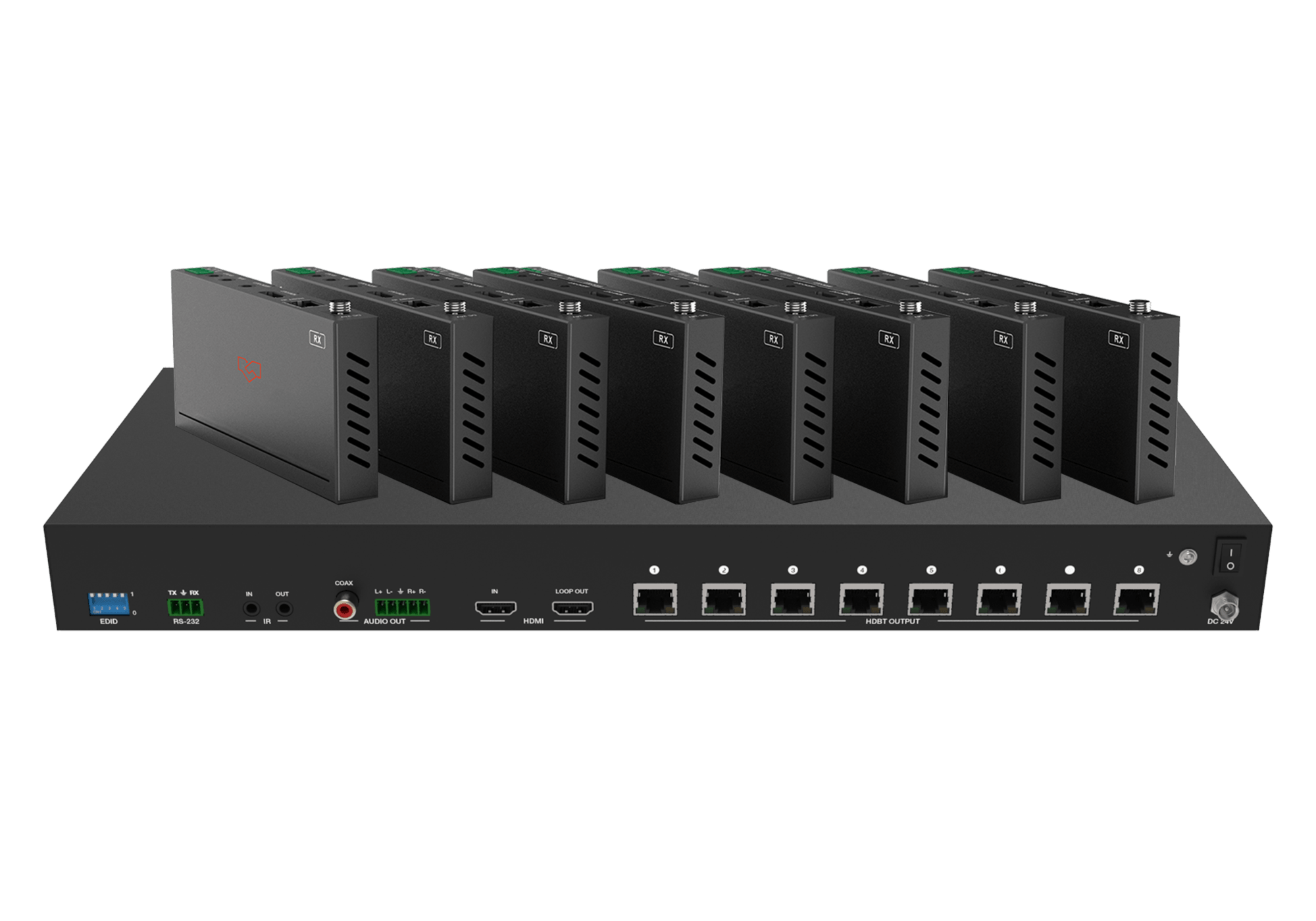
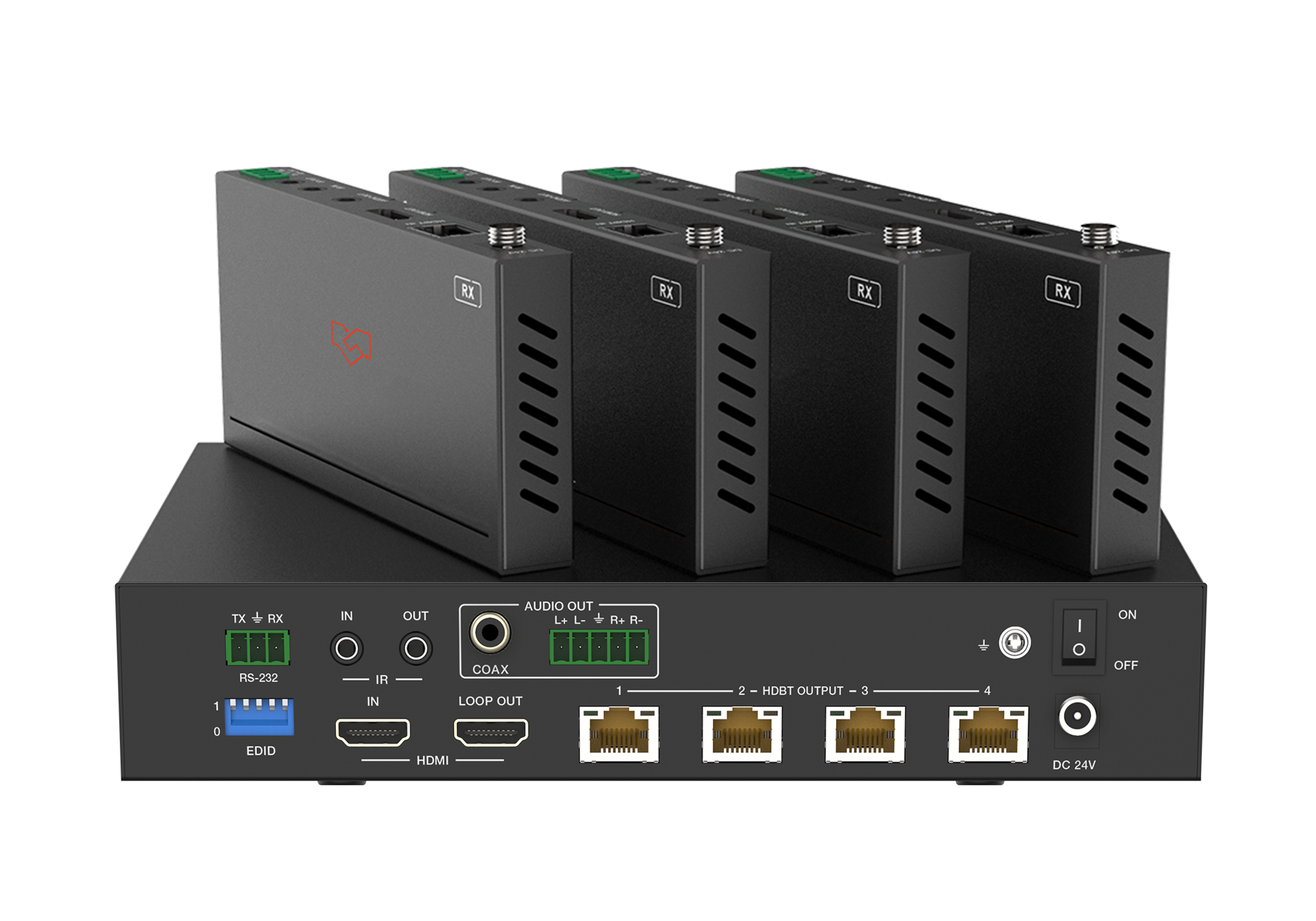
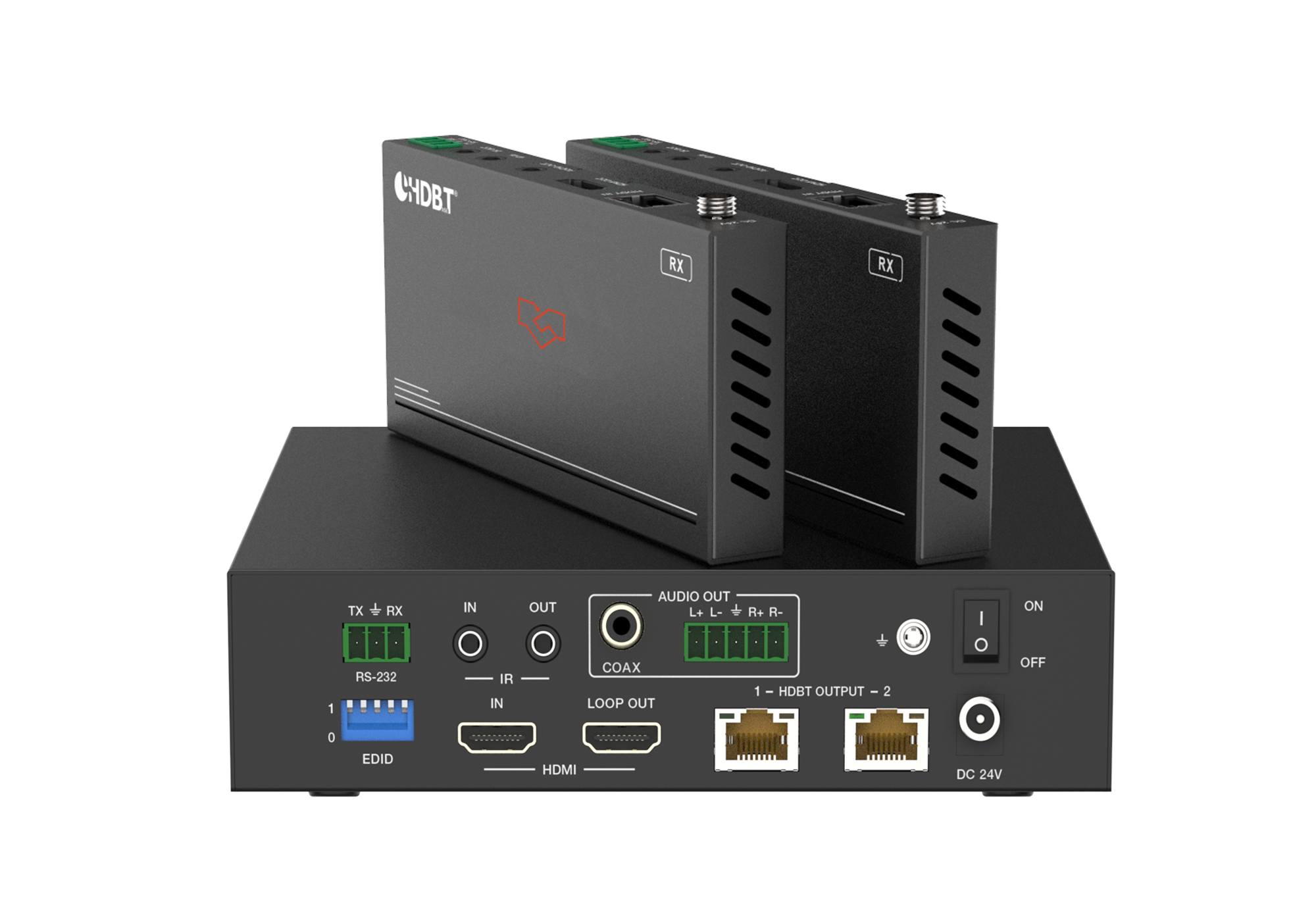
About HDMI over HDBaseT Distribution Amplifiers
VigilLink's HDBaseT distribution amplifier family combines 4K@60Hz HDMI 2.0 signal splitting with HDBaseT 1.0 long-distance transmission in a single rack unit — replacing both a dedicated distribution amplifier and separate HDBaseT transmitter extenders with one device. Each output delivers 4K@60Hz at 18Gbps over a single Cat6 or Cat6A cable to distances up to 150 meters, with included receiver units. Available in 1x2 (VLSP-12HT150), 1x4 (VLSP-14HT150), and 1x8 (VLSP-18HT150) output configurations, this family is the standard choice for large venues, campus AV systems, and any installation where display locations are distributed across distances that standard HDMI cabling cannot reach.
Choosing the Right HDBaseT Distribution Amplifier
Output count (VLSP-12HT150 / VLSP-14HT150 / VLSP-18HT150): All three models deliver identical 4K@60Hz HDBaseT performance at 150 meters per output. Choose the VLSP-12HT150 for two-zone distributions (main room and overflow); the VLSP-14HT150 for up to four display zones; and the VLSP-18HT150 for large venues requiring up to eight distributed display locations from a single head-end unit.
HDBaseT vs. standard HDMI 2.0 distribution: If all displays are within 10–15 meters of the source rack, a standard HDMI 2.0 distribution amplifier (VLSP-12H20 through VLSP-18H20) is simpler and lower cost. If one or more display locations exceed 15 meters, the HDBaseT family eliminates the need for separate extender units at each output, consolidating hardware and reducing installation complexity.
Frequently Asked Questions
What is an HDBaseT distribution amplifier and how is it different from a standard distribution amplifier?
A standard HDMI distribution amplifier outputs HDMI signals to multiple displays over HDMI cables, typically limited to 10–15 meters per run. An HDBaseT distribution amplifier outputs each channel over a single Cat6/6A cable at distances up to 150 meters, with HDBaseT transmission built into each output. No separate HDBaseT extender is needed at each display — the amplifier handles both splitting and long-distance delivery in one unit.
What cable type and category is required for 150m operation?
VigilLink HDBaseT distribution amplifiers require Cat6 or Cat6A cable for reliable 4K@60Hz operation at distances up to 150 meters. Cat5e can be used but may limit reliable operation to shorter distances depending on installation quality. Always use solid-core, unshielded or shielded Cat6/6A with proper termination — avoid patch cables for runs over 50 meters.
Do I need a receiver at each display?
An HDBaseT-compatible display or dedicated HDBaseT receiver is required at each output to terminate the signal. VigilLink HDBaseT distribution amplifiers are compatible with all standard HDBaseT receivers and HDBaseT-enabled displays. If the display does not have a built-in HDBaseT input, a standalone HDBaseT receiver converts the Cat6 signal back to HDMI at the display end.
What resolution and HDR formats are supported?
All three HDBaseT distribution amplifier models support 4K@60Hz 4:4:4 at 18Gbps, with HDR10, Dolby Vision, HLG, and HDCP 2.3 passthrough to all outputs. These models use HDMI 2.0 technology and do not support 8K or 4K@120Hz — for those requirements, an HDMI 2.1 distribution amplifier is needed.
Can these be used in daisy-chain or cascaded configurations?
HDBaseT distribution amplifiers are designed for star topology — one central unit feeding multiple distributed display locations, not daisy-chained. Cascading HDBaseT units introduces additional latency, potential signal degradation, and HDCP handshake complexity. For installations requiring more than eight outputs, two separate VLSP-18HT150 units driven from a distribution amplifier upstream is the recommended approach.