

Home > HDMI Distribution Amplifiers > HDMI 2.0 with Audio De-embed & Downscale
8K 48Gbps HDMI 2.1 | 4K 18Gbps HDMI 2.0 | 4K 18Gbps HDMI 2.0 over HDBaseT | HDMI 2.0 with Audio De-embed & Downscale | VLink HDMI over CAT with Extenders
4K 18Gbps HDMI 2.0 Distribution Amplifiers with Audio De-Embed & Downscale
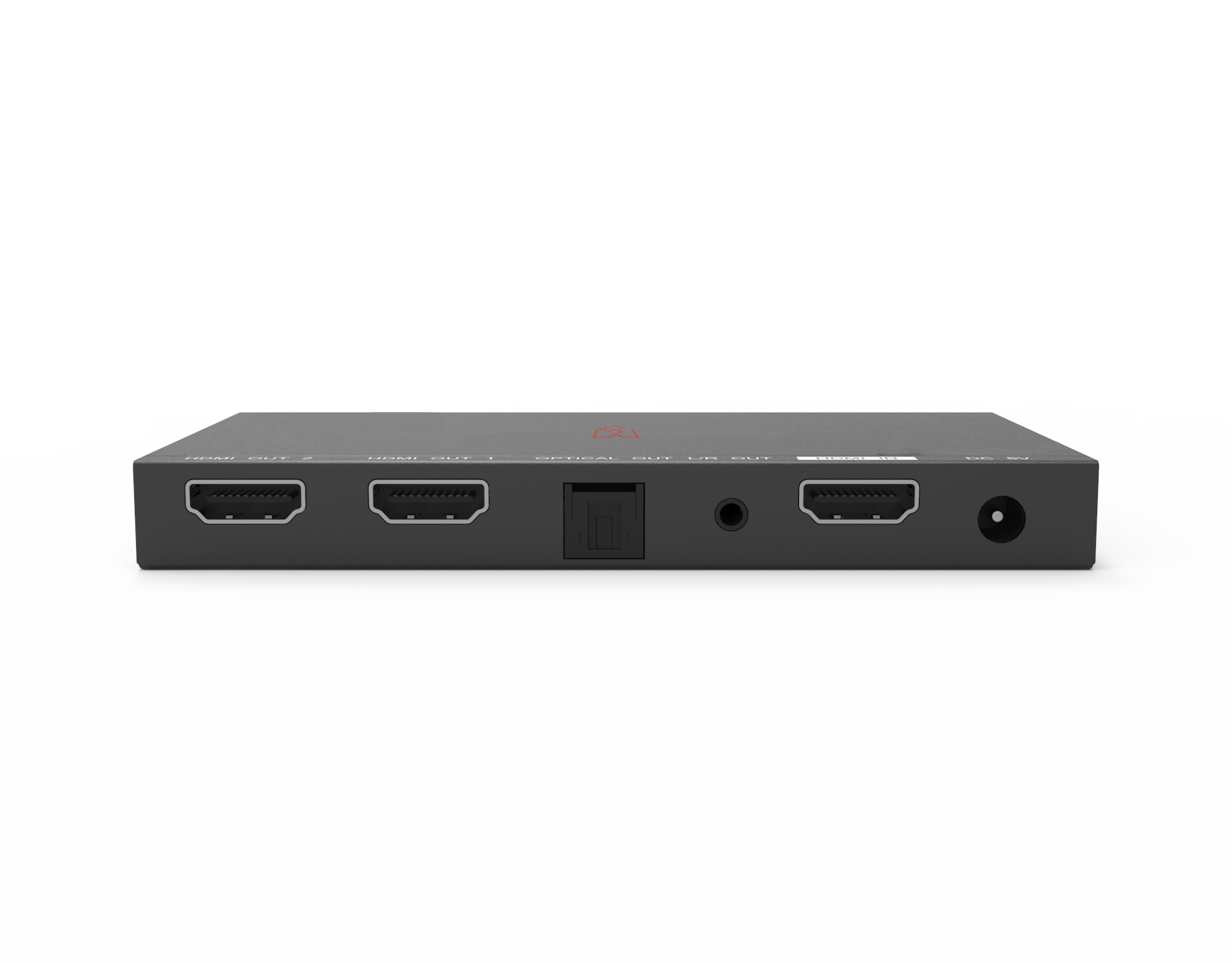
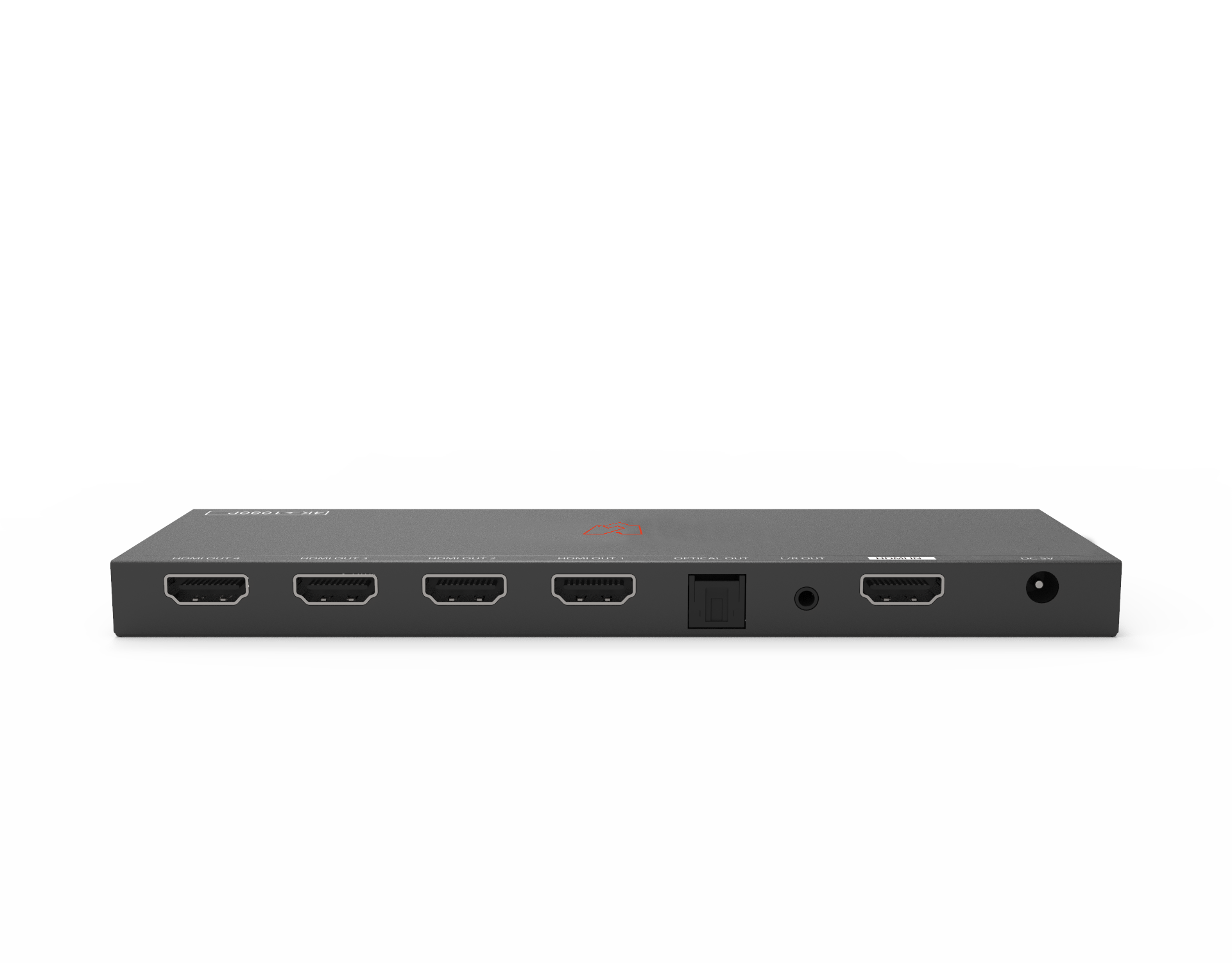
About HDMI Distribution Amplifiers with Audio De-Embedding
VigilLink's audio de-embedding distribution amplifiers solve a common professional AV challenge: distributing a 4K@60Hz HDMI source to multiple displays while simultaneously extracting the embedded audio for a separate room sound system — in a single inline device. The VLSP-AS12H20 (1x2) and VLSP-AS14H20 (1x4) deliver full 18Gbps HDMI 2.0 video distribution to all HDMI outputs while simultaneously outputting analog stereo (L/R), optical TOSLINK, and coaxial S/PDIF audio from the same HDMI source. An integrated downscaler also converts the 4K signal to 1080p on the audio output path, supporting legacy audio receivers and processors. These models eliminate the need for a separate HDMI audio de-embedder in the signal chain.
Choosing the Right Model
Choosing Between the VLSP-AS12H20 and VLSP-AS14H20
Both models provide identical audio de-embedding and downscale functionality — the only difference is output count. The VLSP-AS12H20 distributes to two HDMI displays; the VLSP-AS14H20 distributes to four. Choose based on the number of display destinations in the installation. For installations requiring eight or more HDMI outputs with audio de-embedding, pair an HDMI 2.1 SA model (VLSP-12H21SA or VLSP-14H21SA) with a downstream distribution amplifier.
Frequently Asked Questions
What audio formats can be de-embedded from the HDMI signal?
The VLSP-AS12H20 and VLSP-AS14H20 extract PCM stereo (2-channel) audio from the HDMI stream and output it as analog L/R, optical TOSLINK, and coaxial S/PDIF simultaneously. Bitstream formats such as Dolby Digital and DTS are passed on the optical and coaxial outputs where supported. The integrated downscaler processes the video path only — audio de-embedding operates independently.
Does audio de-embedding affect the video signal quality on the HDMI outputs?
No. Audio extraction is performed independently of the video data path. The full 4K@60Hz 18Gbps HDMI 2.0 signal — including HDCP 2.3, HDR10, Dolby Vision, and all video metadata — passes transparently to all HDMI display outputs without modification. The de-embedded audio outputs are separate from and do not affect the HDMI video outputs.
What does the downscale function do on these models?
The integrated downscaler converts the 4K@60Hz input signal to 1080p on the audio output path. This is useful when the audio extraction destination — a legacy AV receiver, DSP, or recording device — also processes video and is limited to 1080p input. The HDMI display outputs continue to carry native 4K@60Hz unaffected by the downscale function.
When should I choose an audio de-embedding DA over a separate de-embedder?
A combined distribution amplifier with built-in audio de-embedding is the right choice when the installation requires both video distribution and audio extraction from the same source. Using a separate HDMI audio de-embedder in series adds an extra device, an additional HDCP handshake point, and additional cable runs. The VLSP-AS series consolidates both functions into a single unit, reducing rack space, cost, and failure points.
Are these compatible with HDMI 2.1 sources?
The VLSP-AS12H20 and VLSP-AS14H20 are HDMI 2.0 devices supporting 18Gbps bandwidth (4K@60Hz maximum). They are compatible with HDMI 2.1 sources but will operate at HDMI 2.0 bandwidth — 8K, 4K@120Hz, VRR, and ALLM from an HDMI 2.1 source will not be passed through. For HDMI 2.1 sources requiring audio de-embedding, use the VLSP-12H21SA or VLSP-14H21SA.