

H.265 AVoIP Solutions | 1G 1080p and 4K60 AV over IP


About H.265 AVoIP Solutions
VigilLink's H.265 AVoIP product family delivers professional video distribution over standard 1 Gigabit Ethernet infrastructure, using H.265 (HEVC) compression to transport 1080p and 4K60 video across existing enterprise network switches without dedicated AV cabling. H.265 (High Efficiency Video Coding) is an intra/inter-frame compression standard that encodes video at roughly half the bitrate of H.264 at equivalent quality, making it well-suited for large-scale AVoIP installations where maximizing endpoint count on 1G infrastructure is the primary design objective. VigilLink's H.265 lineup spans 1080p60 transmitters, receivers, and KVM-capable encoder/decoder pairs with integrated videowall processing, a 4K60 4:4:4 transceiver for higher-resolution requirements, and dedicated controllers for centralized routing and management.
Choosing the Right H.265 AVoIP Product
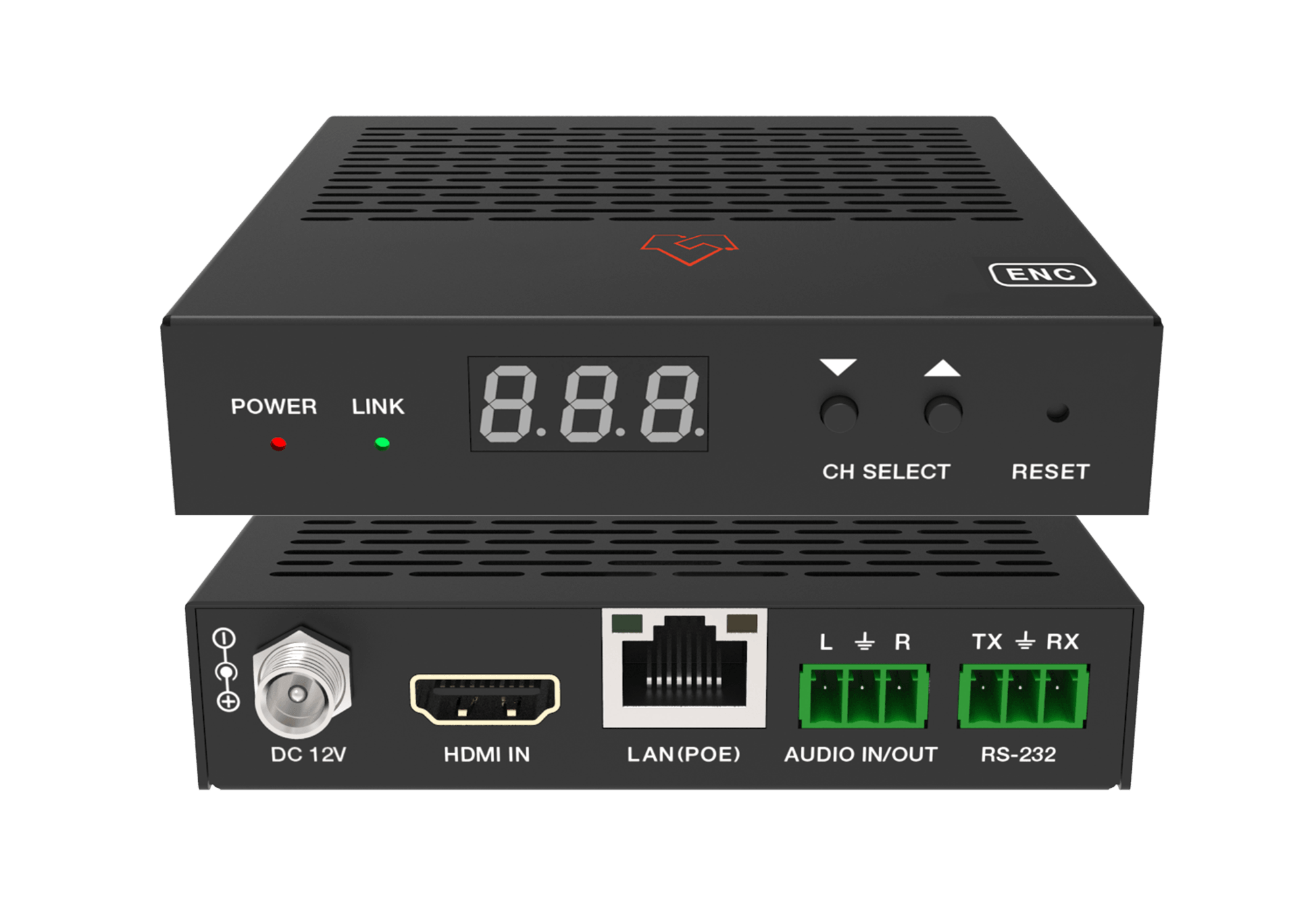
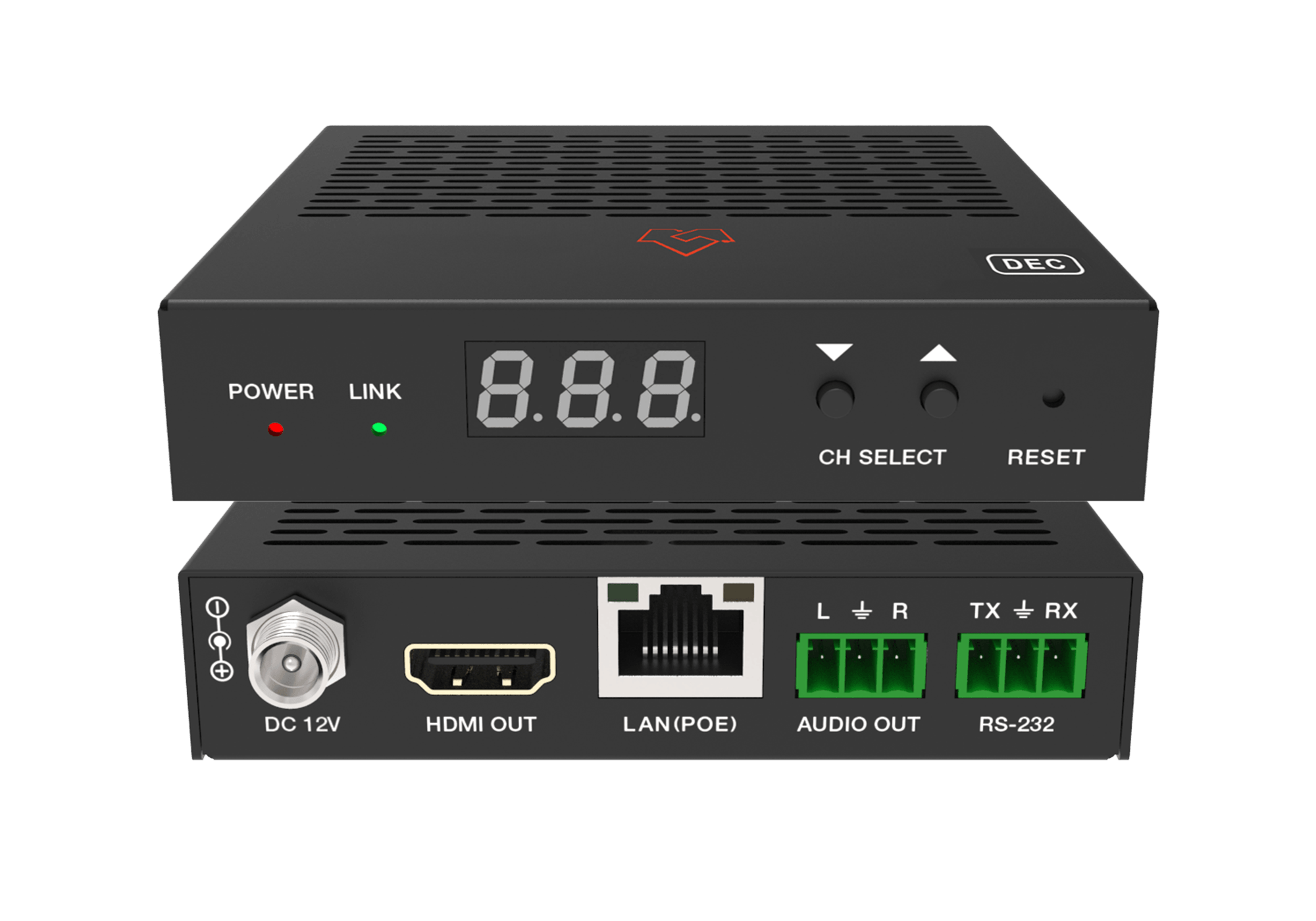
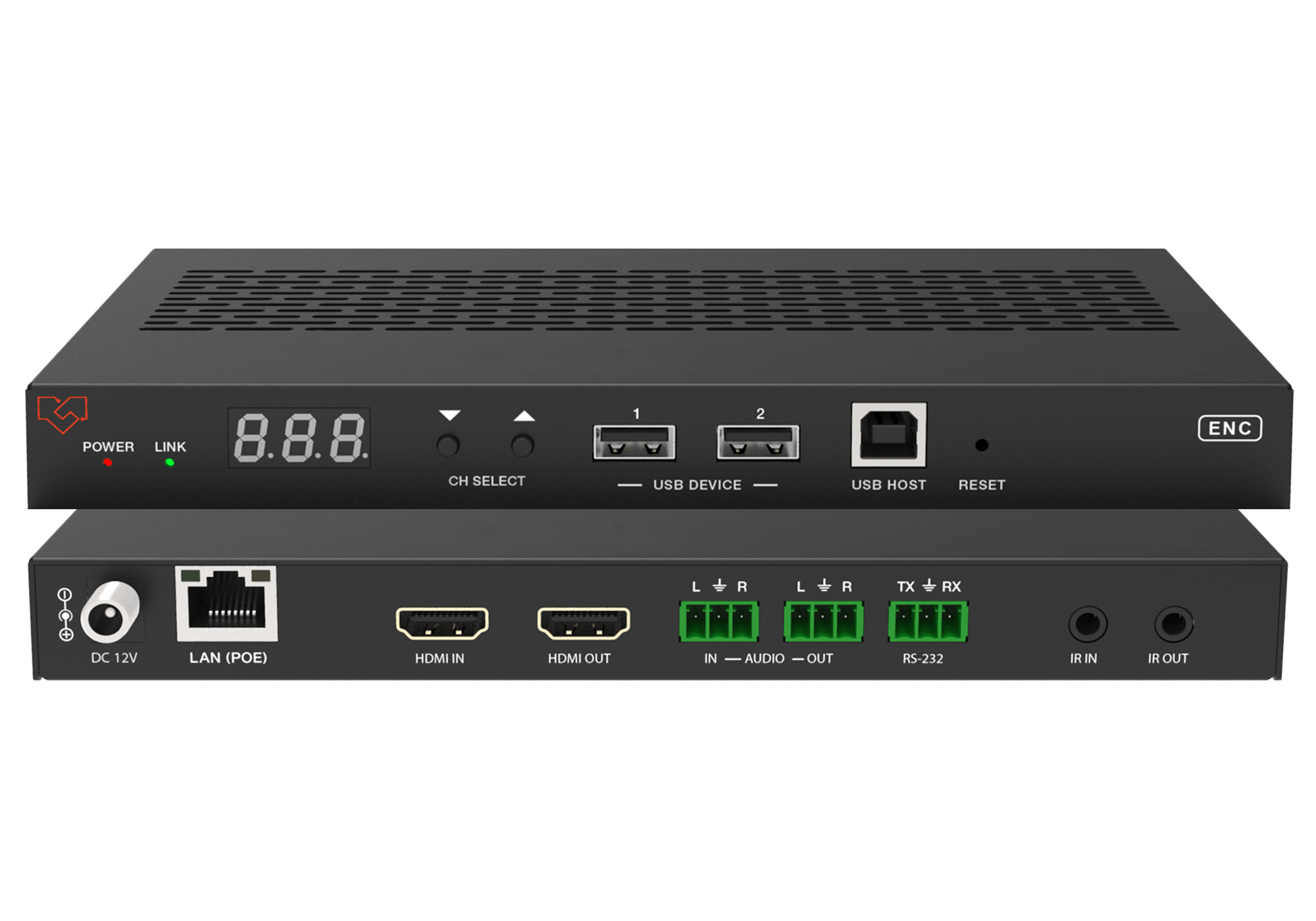
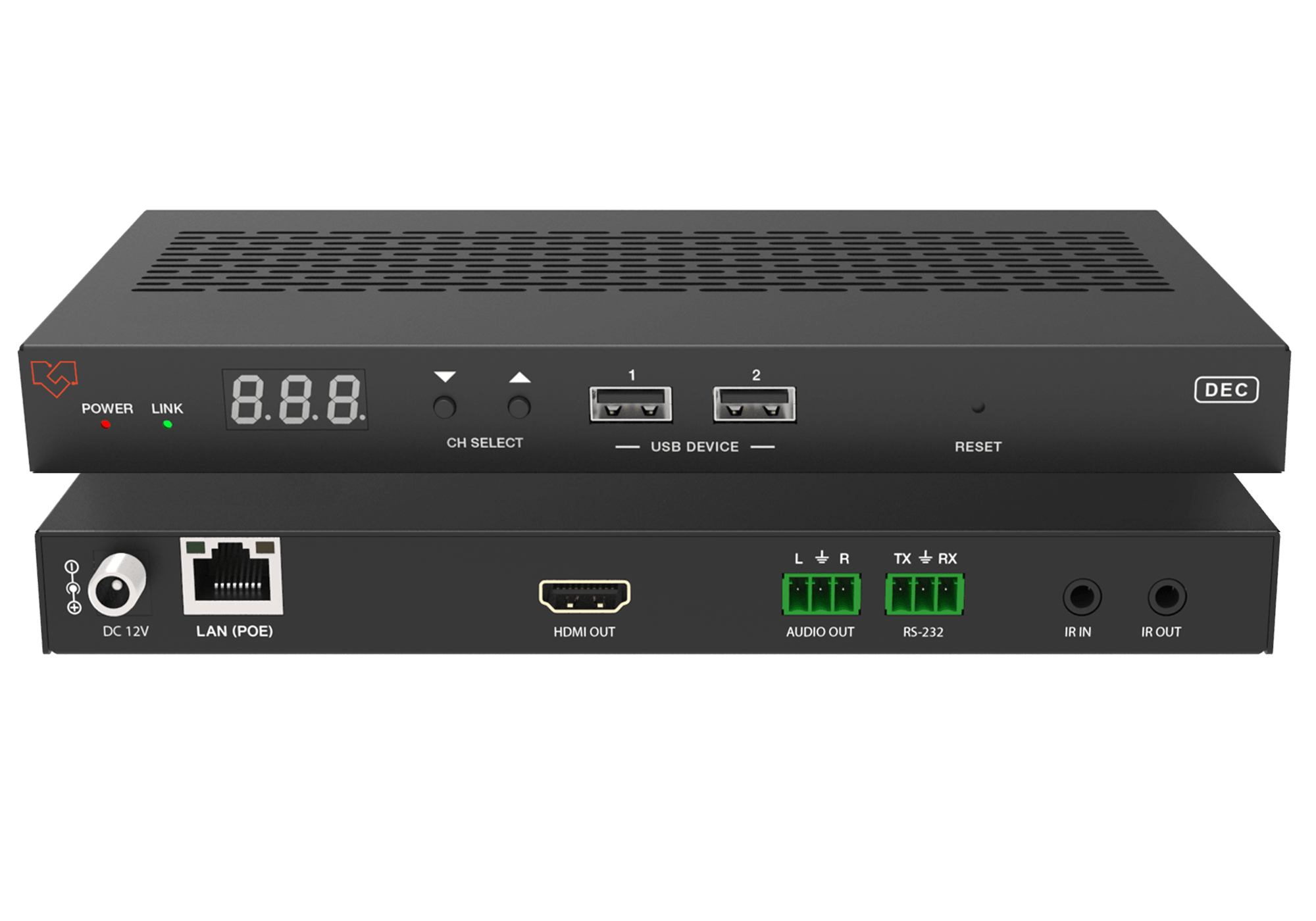
1080p60 with Videowall and KVM — Encoder/Decoder Sets (VLIP-H5HDK-EC / VLIP-H5HDK-DC and VLIP-H5HD-EC / VLIP-H5HD-DC): The VLIP-H5HD series delivers H.265-compressed 1080p60 distribution over 1G Ethernet with integrated videowall processing at the decoder endpoint. The K variants (VLIP-H5HDK-EC / VLIP-H5HDK-DC) add USB KVM extension and IR control passback — enabling keyboard, mouse, and remote control operation through the same network connection as video. Choose the standard H5HD series for display-only distribution; choose the K variant when remote desktop access or IR control passback is required at the display location.
4K60 4:4:4 Transceiver (VLIP-H54KC-TRX): The VLIP-H54KC-TRX is a 4K60 4:4:4 H.265 AVoIP transceiver — a single unit that operates as both encoder and decoder — delivering HDMI 2.0 18Gbps 4K60 transport over 1G Ethernet. This model is suited for installations requiring 4K60 resolution at 1G infrastructure cost, without committing to a 10G SDVoE deployment. The transceiver form factor simplifies stock management in systems with symmetric encoder/decoder counts.
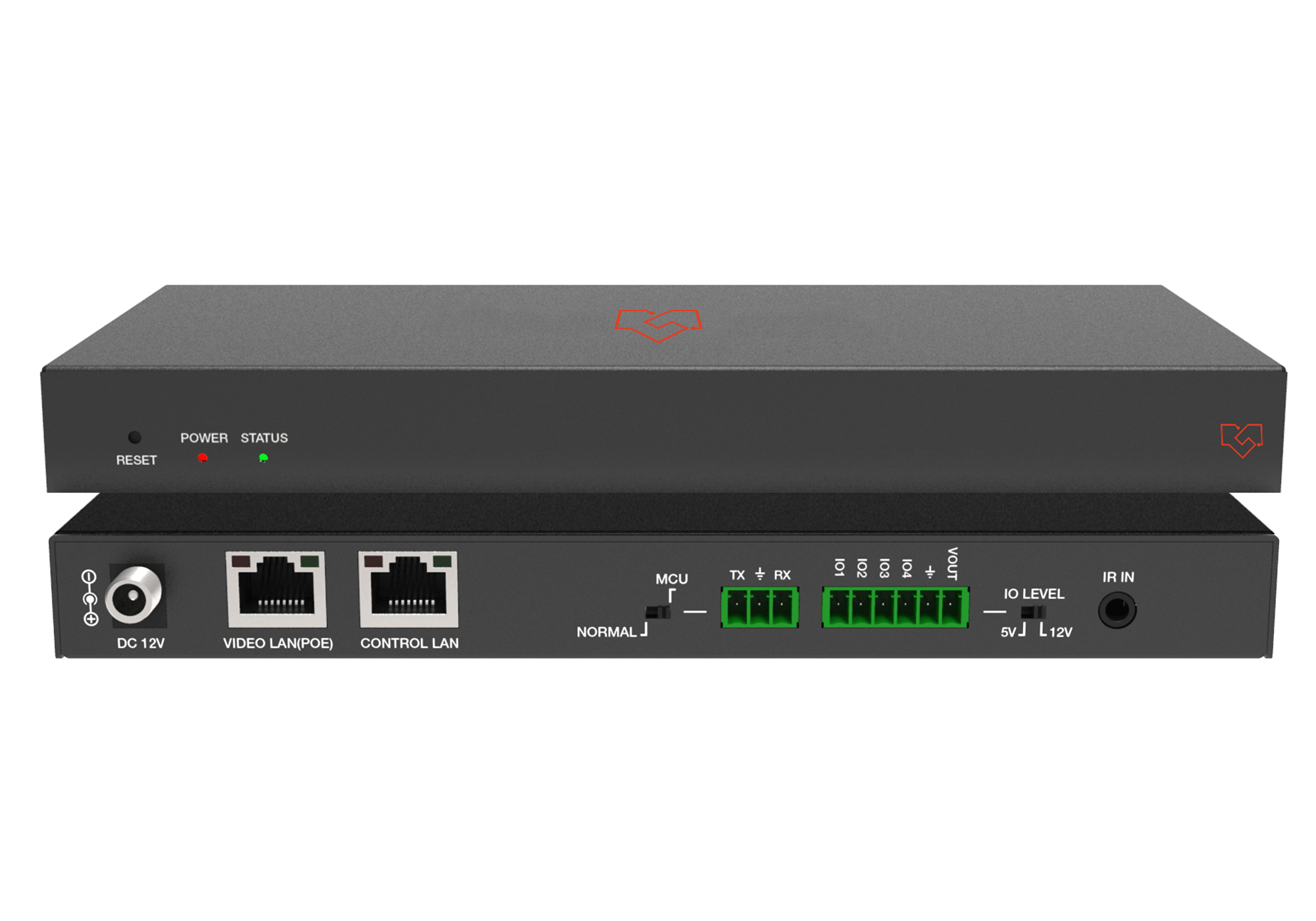
Controllers (VLIP-H51G-CTRL / VLIP-H54G-CTRL): The VLIP-H51G-CTRL manages the 1080p H5HD and H5HDK endpoint families; the VLIP-H54G-CTRL manages the 4K H54KC-TRX family. Both controllers provide centralized routing, switching, and management through a software interface. A controller is required for installations involving more than one source and display where software-defined routing between endpoints is needed.
Frequently Asked Questions
What is H.265 AVoIP and how does it work?
H.265 AVoIP encodes video at the source using H.265 (HEVC) compression, transmits the compressed stream as IP multicast packets over a standard 1 Gigabit Ethernet network, and decodes it at one or more display endpoints. Because H.265 reduces 1080p or 4K video to bitrates compatible with 1G network bandwidth, the technology enables large-scale multi-source, multi-display installations on the same network infrastructure used for IT data traffic — without dedicated AV cabling or a hardware matrix switcher.
What is the latency of VigilLink H.265 AVoIP products?
H.265 AVoIP introduces compression encoding and decoding latency, typically in the range of one to several frames depending on the compression settings and endpoint hardware. This latency is acceptable for most distribution, digital signage, and presentation applications, but is not suitable for applications requiring real-time interactivity such as KVM-intensive workstation control, live production switching, or simulation environments. For zero-latency requirements, VigilLink's SDVoE product line is the appropriate choice.
How many H.265 AVoIP endpoints can a single network support?
The number of endpoints is determined by network switch capacity and multicast configuration rather than a hard limit in the endpoints themselves. In an IP multicast-configured 1G network, dozens to hundreds of decoders can receive the same stream simultaneously without multiplying network bandwidth consumption. The practical limit per installation is set by switch port count, IGMP snooping configuration, and total bandwidth budget across all active streams.
Does the VLIP-H54KC-TRX support 4K60 4:4:4 over a standard 1G switch?
Yes. The VLIP-H54KC-TRX uses H.265 compression to transport 4K60 4:4:4 within the bandwidth envelope of a standard 1 Gigabit Ethernet connection. This makes it possible to distribute 4K60 HDMI 2.0 content across existing 1G network infrastructure without upgrading to 10G switching. Compression is applied to achieve this — if visually lossless 4K transport is required on 1G infrastructure, the JPEG 2000 product line should be evaluated instead.
What is the difference between the VLIP-H5HD and VLIP-H5HDK models?
Both the VLIP-H5HD-EC/DC and VLIP-H5HDK-EC/DC deliver H.265 1080p60 AVoIP with integrated videowall processing. The VLIP-H5HDK series adds USB KVM extension — enabling keyboard and mouse input at the display location to control a remote source computer — plus IR signal passback for remote control operation. Choose the standard H5HD pair for video-only distribution and the H5HDK pair when remote desktop interaction is required at display endpoints.